To continue with my series on marvellous writing, here is another particularly beautiful and moving piece, from the memoir of actor and writer, Dirk Bogarde, called A Short Walk from Harrods (1993). Dirk Bogarde (1921 – 1999) was an accomplished actor, but he was also an excellent writer. I have read and enjoyed every one of his books. My favourite autobiography of his has the witty title, A Postillion Struck by Lightning. In that one, he writes that he and his sister used to call their hats, “hates”, since they hated wearing them. To this day, I wear hates, not hats.
Sir Dirk Bogarde (born Derek Jules Gaspard Ulric Niven van den Bogaerde) wrote fifteen best-selling books; nine volumes of memoirs and six novels, as well as essays, reviews, poetry, and collected journalism.
Dirk Bogarde – his good looks made him a popular romantic lead.
Iconic roles
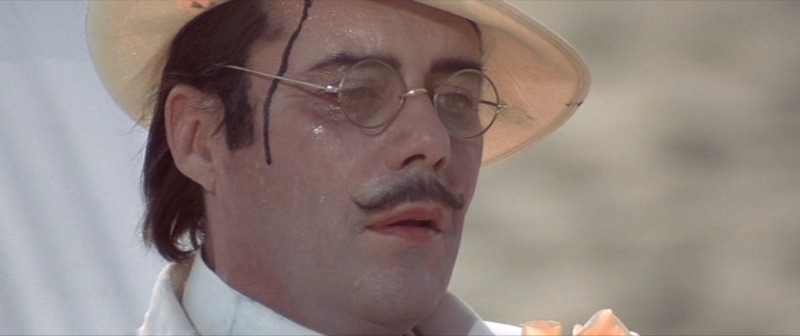
Below are photos of him in one of his most iconic and award-winning roles, as “Gustav von Aschenbach”, in Luchino Visconti’s 1971 eponymous film of Thomas Mann’s classic novel, Death in Venice. In Death in Venice, Bogarde is masterful as Von Aschenbach, a composer who discovers a last vestige of beauty and emotion during a visit to Venice at the turn of the century. In the famous final scene, Von Aschenbach dies, and in the heat of the day, his hair dye melts and drips over his made-up face like blood.
Dirk and Tony
After Dirk left the American and British film industries to work on arthouse films in Europe, for which he won many accolades, he bought a house in Provence, France, and moved there with Anthony (Tony) Forwood (1949–1988). Though neither of them ever explained or commented on it, they were life partners, and they lived together from 1960, or even earlier, until Tony’s death on 18 May 1988. Dirk died eleven years after Tony, on 8 May 1999.
There was no other romantic interest in his life that we know of, and while Tony was Dirk’s manager, he was also, I suspect, the love of his life. Tony had been briefly married to actress Glynis Johns from 1942 to 1946, and they had a son, Gareth.
Actor Dirk Bogarde and his partner Anthony Forwood photographed in 1952. Homosexuality would only be partially decriminalized in the UK 15 years later, in 1967.
A Short Walk from Harrods is about the two of them moving back to London, UK, from their home in France, due to Tony suffering from liver cancer and Parkinson’s Disease, and Dirk’s own health problems of heart disease and stroke. They moved into their new apartment, which was a short walk from Harrods, hence the title of the memoir, shortly before Tony died.
How to communicate grief
Here is the part of the book that convinced me that it is possible to describe the deepest, most terrible grief in such a restrained and subtle manner, that it loses none of the intensity in the transmittal to the reader. A few well chosen words. An honest and heartfelt observation. A deflection of the pain. These things, if combined, create a silence and detachment that pauses the voice of the author, and allows the reader to insert their own voice. It creates a moment of connectivity and empathy.
In Lou Reed’s song, Perfect Day, he created this moment. The lyrics are lovely, the melody is sweet, the images are of happiness. Then, he ends the last verse, with these words: “I thought I was someone else / someone good”. And the whole picture changes – it pivots.
These paragraphs, below, contain one of the most pivotal lines in the book, and tells us, quite clearly, that Dirk loved Tony. Regardless of all the denials and attempts to hide the truth. Bogarde wrote this. He wrote it exactly like this, because he wanted to reveal something important.
“Sometime in the early hours of the morning Anna shook me awake. He was very ill, breathing badly. Come down. He was quite still, eyes shut, lying on his left-hand side. I took his hand in mine. He whispered a soft, imperceptible almost, sigh and then was still. ‘I think he’s gone,’ I said. Anna burst into tears, covered her face with her hands, head bowed. A replay of Christine on the terrace long ago.
I gently put his hand under the bed covers. In case it got cold? Touched Anna’s shoulder, gave her a kiss, went down to the sitting room to telephone his family. It was 2.15 a.m.”
A Short Walk from Harrods, by Dirk Bogarde (Penguin, 1994, p. 234) Photo: Dirk Bogarde (right), with Tony Forwood (left).
A line that reveals love
Which sentence makes the difference? For me it is; “In case it got cold?”It is a question, as if he is unsure, but thinking that he must still take care of Tony, because despite what he had said himself, and Anna’s tears, Tony is not dead – he could be feeling the chill. He must be made comfortable. Dirk asks the question as though he is the loved one, the vulnerable one, who still wants to do the right thing for the love of his life, Tony. He does not say that he loves Tony. Nowhere in the book does he say that. These words have to suffice, and they do.
Sometimes, the quiet voice is clearer and stronger than a voice that shouts and is overloaded with emotion and metaphors. Sometimes, less is more, and sometimes, the simplest words reveal the heart of the matter.

 SEVEN CIRCUMSTANCES
To continue with my series on marvellous writing, here is another particularly beautiful and moving piece, from the memoir of actor and writer, Dirk Bogarde, called A Short Walk from Harrods (1993). Dirk Bogarde (1921 – 1999) was an accomplished actor, but he was also an excellent writer. I have read and enjoyed every one of his books. My favourite autobiography of his has the witty title, A Postillion Struck by Lightning. In that one, he writes that he and his sister used to call their hats, “hates”, since they hated wearing them. To this day, I wear hates, not hats.
Sir Dirk Bogarde (born Derek Jules Gaspard Ulric Niven van den Bogaerde) wrote fifteen best-selling books; nine volumes of memoirs and six novels, as well as essays, reviews, poetry, and collected journalism.
Iconic roles
Below are photos of him in one of his most iconic and award-winning roles, as “Gustav von Aschenbach”, in Luchino Visconti’s 1971 eponymous film of Thomas Mann’s classic novel, Death in Venice. In Death in Venice, Bogarde is masterful as Von Aschenbach, a composer who discovers a last vestige of beauty and emotion during a visit to Venice at the turn of the century. In the famous final scene, Von Aschenbach dies, and in the heat of the day, his hair dye melts and drips over his made-up face like blood.
Dirk and Tony
After Dirk left the American and British film industries to work on arthouse films in Europe, for which he won many accolades, he bought a house in Provence, France, and moved there with Anthony (Tony) Forwood (1949–1988). Though neither of them ever explained or commented on it, they were life partners, and they lived together from 1960, or even earlier, until Tony’s death on 18 May 1988. Dirk died eleven years after Tony, on 8 May 1999.
There was no other romantic interest in his life that we know of, and while Tony was Dirk’s manager, he was also, I suspect, the love of his life. Tony had been briefly married to actress Glynis Johns from 1942 to 1946, and they had a son, Gareth.
A Short Walk from Harrods is about the two of them moving back to London, UK, from their home in France, due to Tony suffering from liver cancer and Parkinson’s Disease, and Dirk’s own health problems of heart disease and stroke. They moved into their new apartment, which was a short walk from Harrods, hence the title of the memoir, shortly before Tony died.
How to communicate grief
Here is the part of the book that convinced me that it is possible to describe the deepest, most terrible grief in such a restrained and subtle manner, that it loses none of the intensity in the transmittal to the reader. A few well chosen words. An honest and heartfelt observation. A deflection of the pain. These things, if combined, create a silence and detachment that pauses the voice of the author, and allows the reader to insert their own voice. It creates a moment of connectivity and empathy.
In Lou Reed’s song, Perfect Day, he created this moment. The lyrics are lovely, the melody is sweet, the images are of happiness. Then, he ends the last verse, with these words: “I thought I was someone else / someone good”. And the whole picture changes – it pivots.
These paragraphs, below, contain one of the most pivotal lines in the book, and tells us, quite clearly, that Dirk loved Tony. Regardless of all the denials and attempts to hide the truth. Bogarde wrote this. He wrote it exactly like this, because he wanted to reveal something important.
“Sometime in the early hours of the morning Anna shook me awake. He was very ill, breathing badly. Come down. He was quite still, eyes shut, lying on his left-hand side. I took his hand in mine. He whispered a soft, imperceptible almost, sigh and then was still. ‘I think he’s gone,’ I said. Anna burst into tears, covered her face with her hands, head bowed. A replay of Christine on the terrace long ago.
I gently put his hand under the bed covers. In case it got cold? Touched Anna’s shoulder, gave her a kiss, went down to the sitting room to telephone his family. It was 2.15 a.m.”
A Short Walk from Harrods, by Dirk Bogarde (Penguin, 1994, p. 234) Photo: Dirk Bogarde (right), with Tony Forwood (left).
A line that reveals love
Which sentence makes the difference? For me it is; “In case it got cold?” It is a question, as if he is unsure, but thinking that he must still take care of Tony, because despite what he had said himself, and Anna’s tears, Tony is not dead – he could be feeling the chill. He must be made comfortable. Dirk asks the question as though he is the loved one, the vulnerable one, who still wants to do the right thing for the love of his life, Tony. He does not say that he loves Tony. Nowhere in the book does he say that. These words have to suffice, and they do.
Sometimes, the quiet voice is clearer and stronger than a voice that shouts and is overloaded with emotion and metaphors. Sometimes, less is more, and sometimes, the simplest words reveal the heart of the matter.
Share this: