
I cannot resist the marked-down sections in book stores. When I see books that are on sale, I just lose all common sense, and come home with bags of books I may never actually read. But hey, they only cost a few dollars each, so no damage done, right? One of those impulse buys, in 2018, that I’ve never read until now, is a book titled (deep breath…!) Important Artifacts and Personal Property From the Collection of Lenore Doolan and Harold Morris, including Books, Street Fashion, and Jewelry – Saturday, 14 February, 2009, New York. That’s the title, I kid you not. The author is Leanne Shapton.
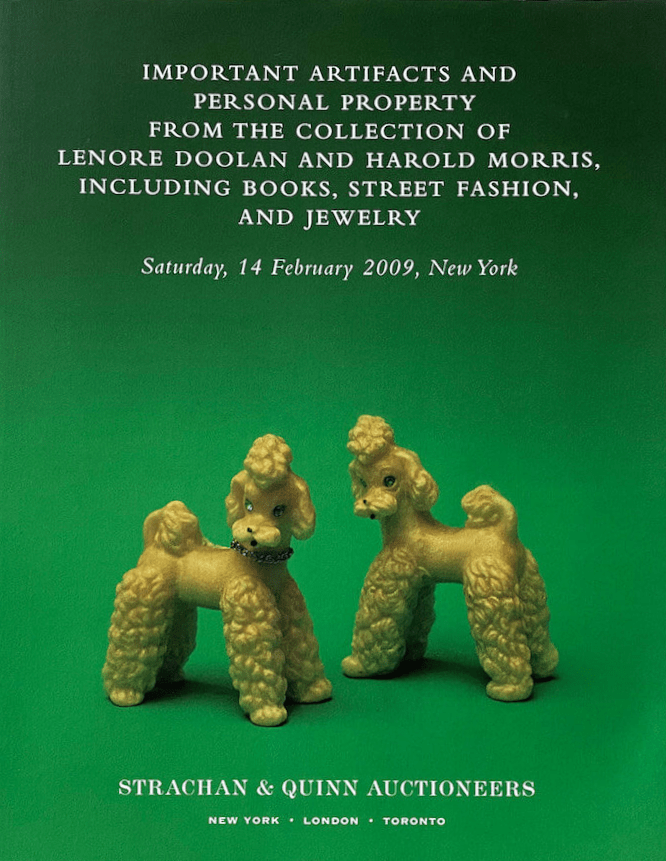
An auction catalogue of the evidence of a relationship
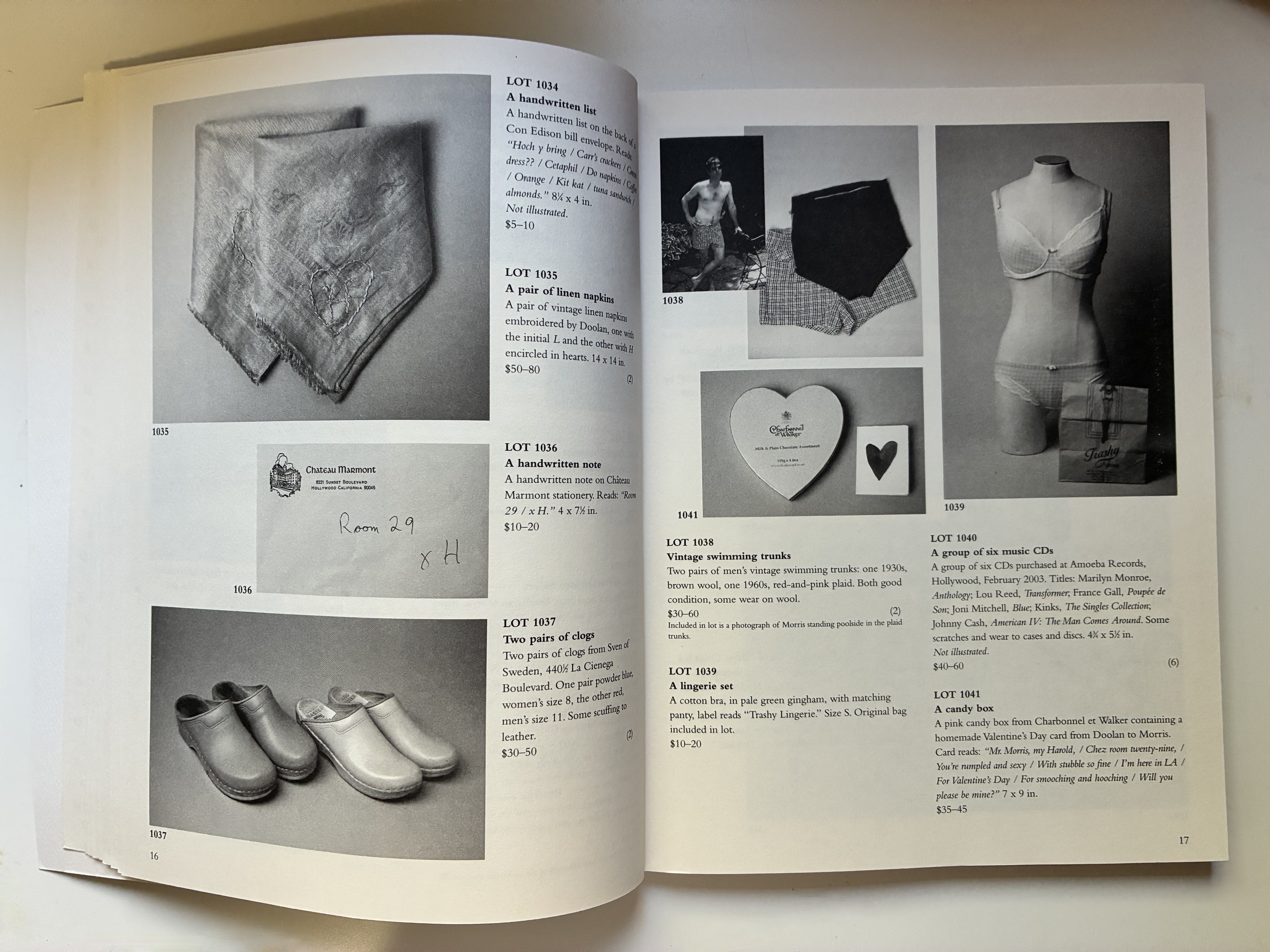
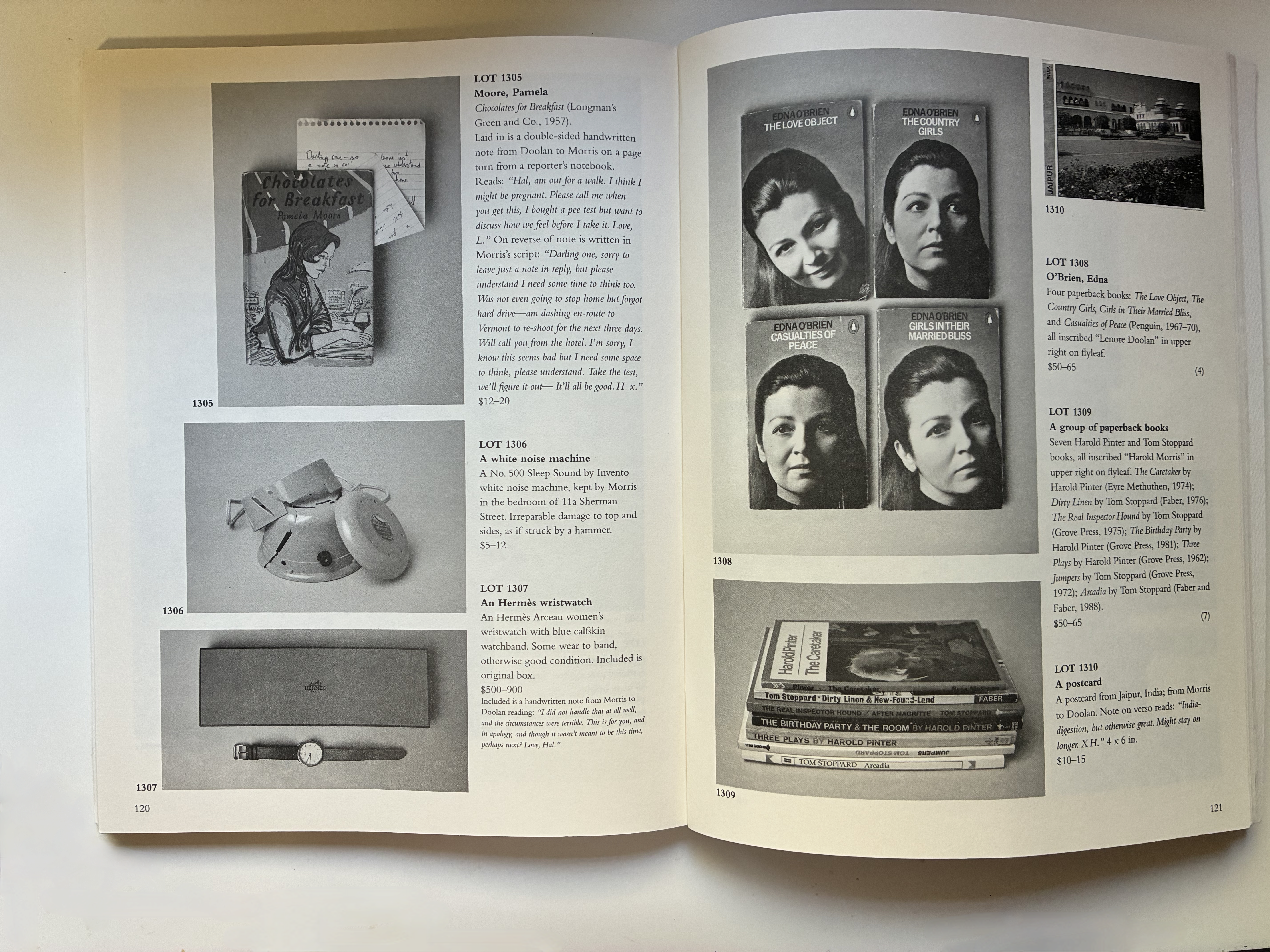
When you flip through it, what you see are pages of black and white captioned photos, or just captions, of the flotsam and jetsam of a relationship. The photos of the things that are evidence of the relationship are presented as they would be in the catalogue of an art auction. And, on the cover, are the words: “Strachan & Quinn Auctioneers”.
When you start to look at the images and read the captions, you are struck by the fact that these things are pretty much like the things that normal people collect and hold on to for the sake of memories: tickets, photos, emails, handwritten notes, clothes, pictures, used books, till slips, music albums, and so on. Nothing is grand, nothing has a high financial value.
I’ve found out a bit about inheritances, as everyone has to do in their life at some point, and the general, and research-based consensus is that emotional value often outweighs financial value in inheritances, as sentimental, personal, and relational factors significantly influence the legacy left to beneficiaries. I’ve even written a song about it; the only thing that I have left from a relationship I had decades ago, is a little plastic heart pendant on a string, worth no money at all, but invaluable to me.
So people keep these bits of evidence, and Shapton has created an art project (I don’t think I can call it a novel, or non-fiction work…) of such items. As the epigraph of the book reads:
“We seek the absolute everywhere, and only ever find things. – Novalis”.
This is the key to understanding the book.
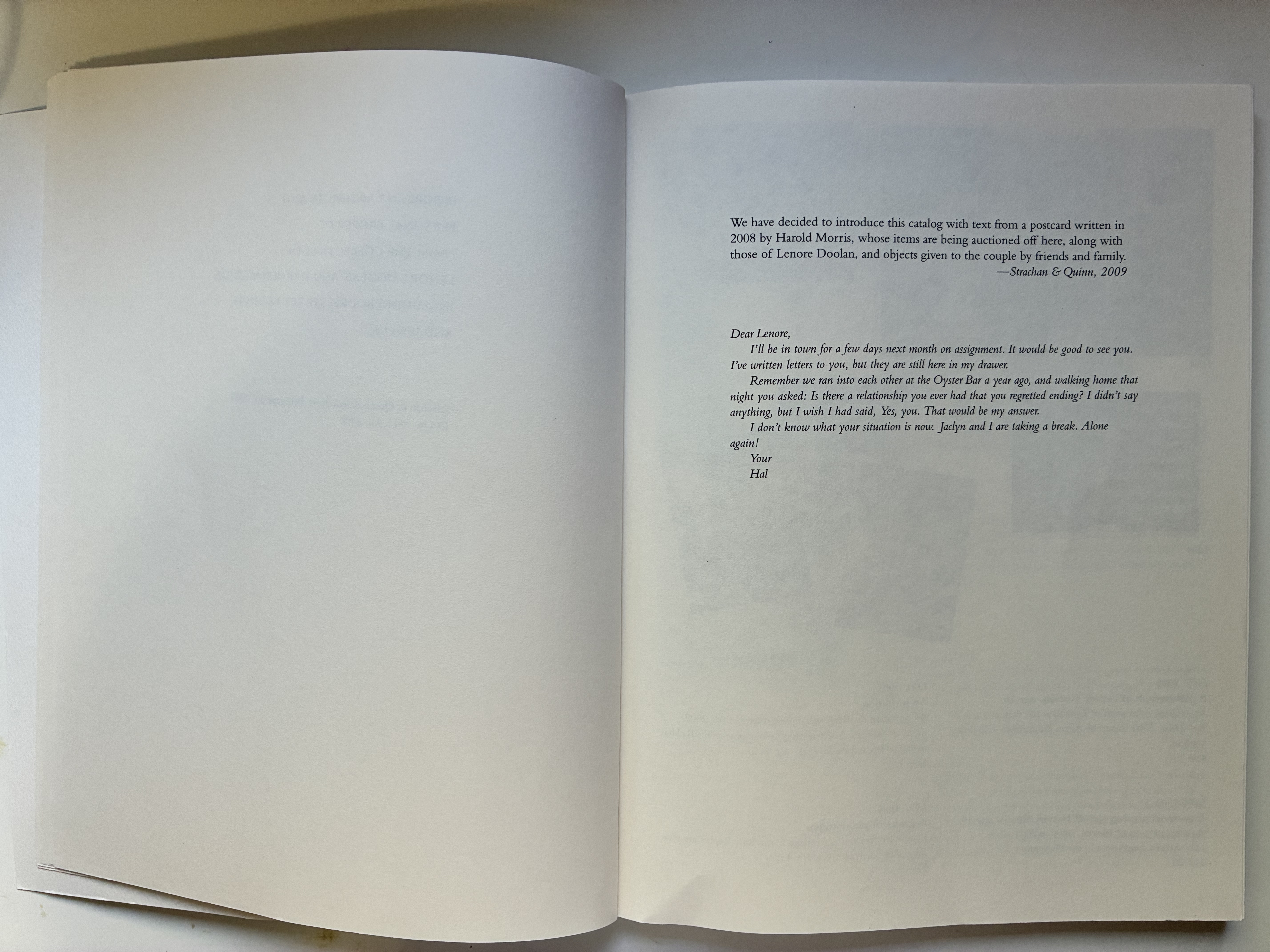
On p. 2, above, top right, there is the text from a postcard written by “Harold Morris”, which documents the beginning of the relationship. It’s kind of kooky but also sweet.
Things, evidence, artifacts, bits and pieces
It’s hard to describe the narrative, such as it is. But like all love stories, it starts with a meeting, falling in love, seduction, using the “L*** Word” for the first time, sharing lives, and so on. The characters named in the book are “Lenore Doolan”, a journalist, and “Harold Morris”, a photographer. I wondered whether these people are real. The publishing details includes; “Snapshots of Doolan and Morris by Leanne Shapton and Michael Schmelling”. Interestingly, the names Doolan and Morris are not italicized or in quotes. So I assume, they could be real people.
The reason I was thinking about this is because these pictures are painfully detailed, candid, and realistic. If Shapton did indeed make up this story-in-pictures, finding, styling, photographing and captioning all of these 129 pages of photos, three or four per page, it is a massive work, a magnum opus. That is to say – a magnum opus made up of emotional trivia.
I’ve been working on a similar kind of art project. So, I have some idea of the effort it takes. But in the end, I fell for this love story the same as if I were reading a novel. Shapton cleverly sometimes uses captions in-between the photos that just say “Not illustrated”. Those are significant, because they describe things that are harder to substantiate, and relate to the transitions in the relationship.
Falling for each other
Page after page, from “Harold Morris” or from “Lenore Doolan”, you get the mental and emotional signposts of a developing relationship. He sends her letters from where he is working overseas. She sends him gifts and writes lists of thoughts of him to herself. They meet up in hotels. They go to parties and events. She talks to him, he talks to her, they text other people about each other.
And I just had to know, how does this end? Because I started to pick up evidence of the usual wobbles and disagreements that happen.
“You used to always say ‘You can call,’ but lately when I do, you are either sleeping, or it sounds like I’m interrupting you, I can’t talk like that. After such a bad fight, please just be there, please even if you’re angry. We need to be able to talk…”
– p. 42, “Lot 1110”
I read this and thought, isn’t that just how people talk, and think? Yes, I almost heard myself in those words.
Do you recognize yourself?
That’s what makes this unusual book so touching. Each of these 1332 “lots” in the catalogue has an auction estimate. The things might be proof of life-changing events, but like many things that we inherit, and value, they are worth next to nothing. For instance, “Lot 1110” (the quote, above), has an “auction estimate” of “$5 to $10” – presumably for the value of the used novel in which Doolan had put a handwritten note with those words.
No spoilers here, so if you want to know how it ends, read it yourself. I cheated and read the end before I was three-quarters through. The book is 1332 photos and captions of a loosely woven timeline of a love affair. Whatever connections, or connecting threads you look for between one thing and another, you have to deduce from what’s in the picture and how it’s described, and to whom the object belongs.
So I pulled at the loose thread, and kept pulling, and eventually just wanted to find out how it all unravels. I guess if, sometime in the far future, space aliens were to dig up the Earth to find out about the humans who lived here, they would also be piecing bits and pieces together like a mysterious jigsaw-puzzle, or an unraveled knitted jumper.
Rethink the artifacts of your life
Why then read it at all? As created images in an art project, it’s rare enough. As a love story told with minimal words and maximum visual cues, like a graphic novel or comic book, it is unusual and also worth reading. Would it have been better printed in full colour on glossy paper? No. This is not a catalogue of valuable art.
As for me, the silly old romantic that I am, I saw my life through those photos. Each one is styled precisely so that the reader can empathize with the narrative, and perhaps recognize something similar from their own life. Masterfully done, Ms. Shapton. No wonder reviewers call it “completely sensational” and “wildly romantic”.
 SEVEN CIRCUMSTANCES
Ag, dis lekker om jou hier te sien! ‘n Baie interessante vertelling oor ‘n eienaardige boek/katalogus!
👋 Hi Fran!