
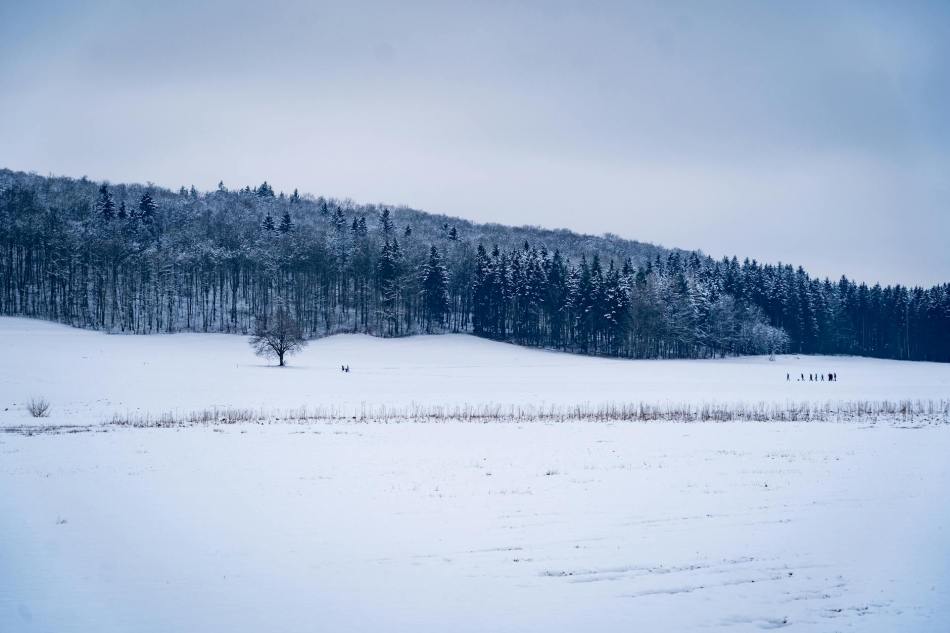
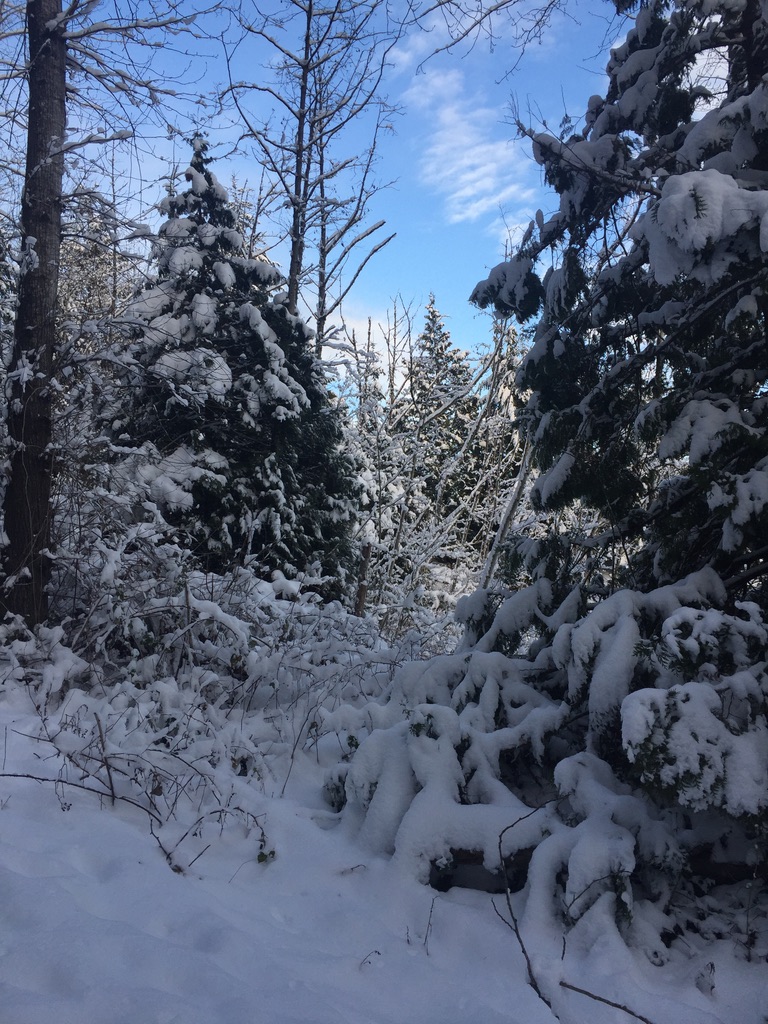
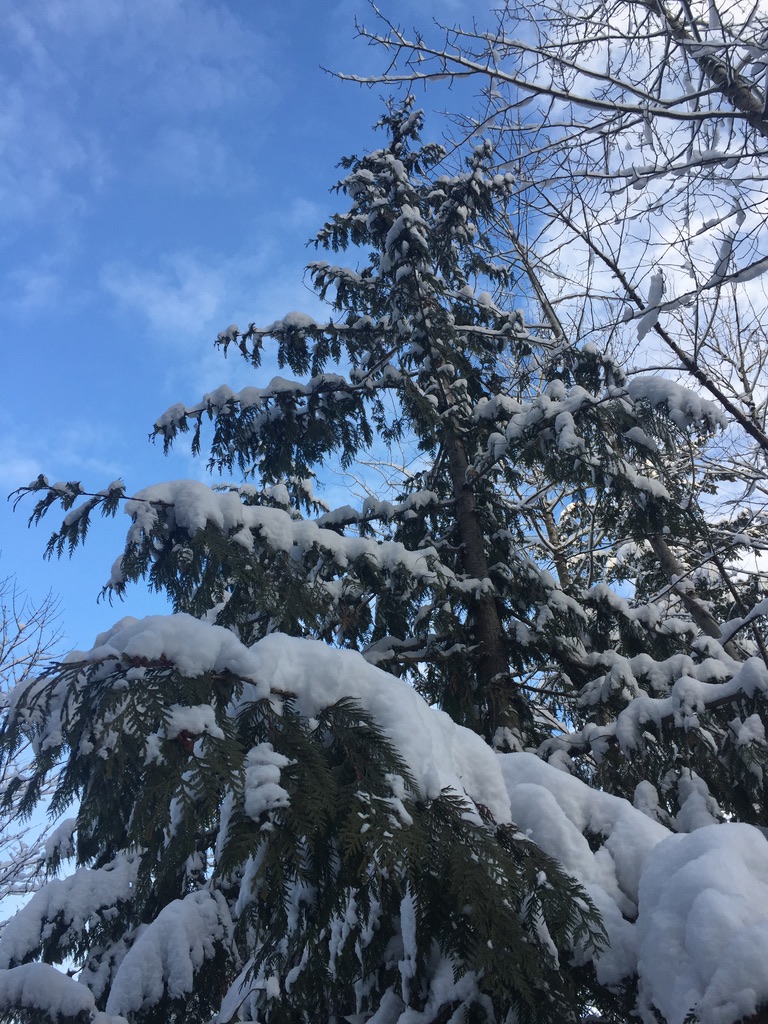
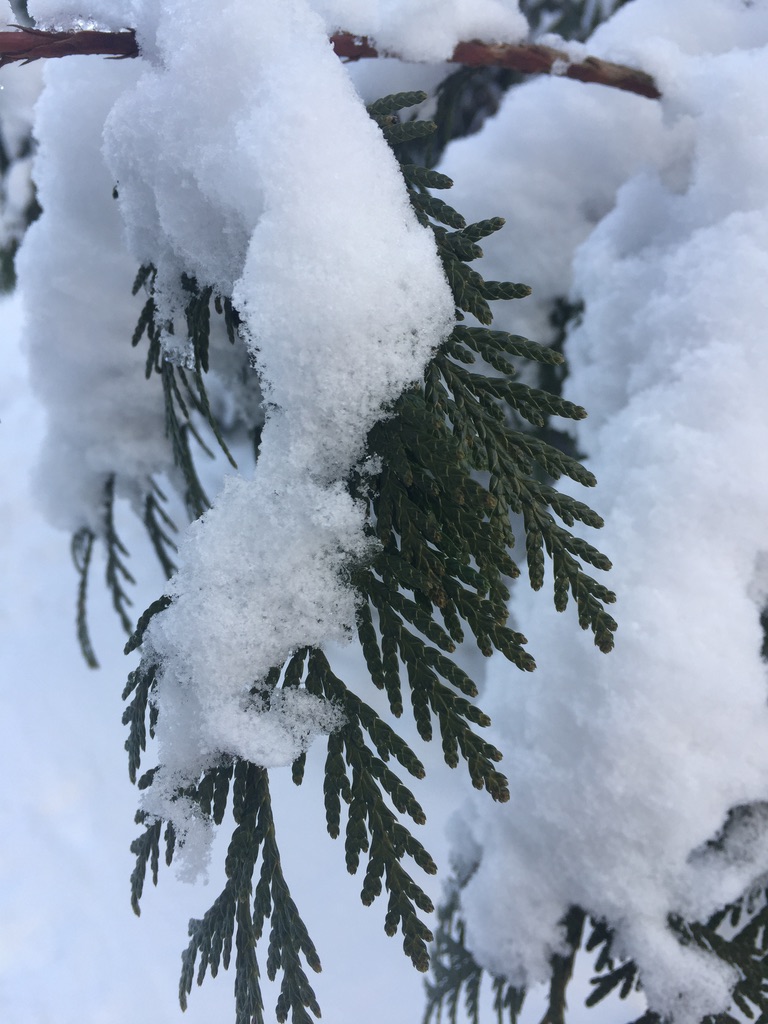
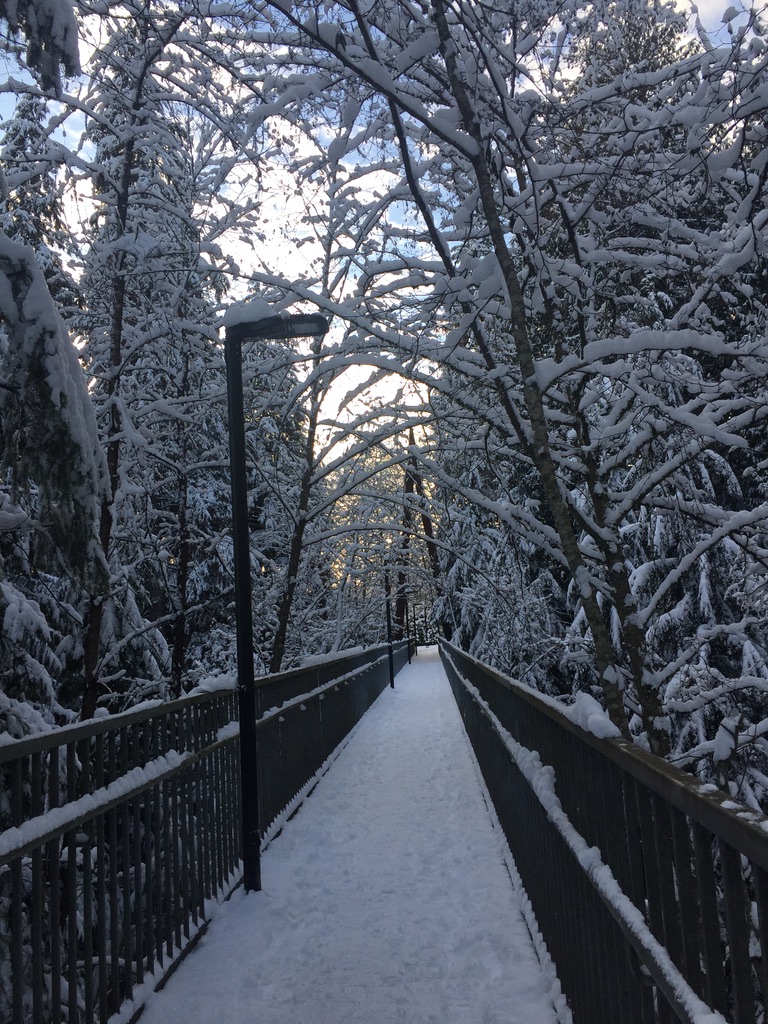
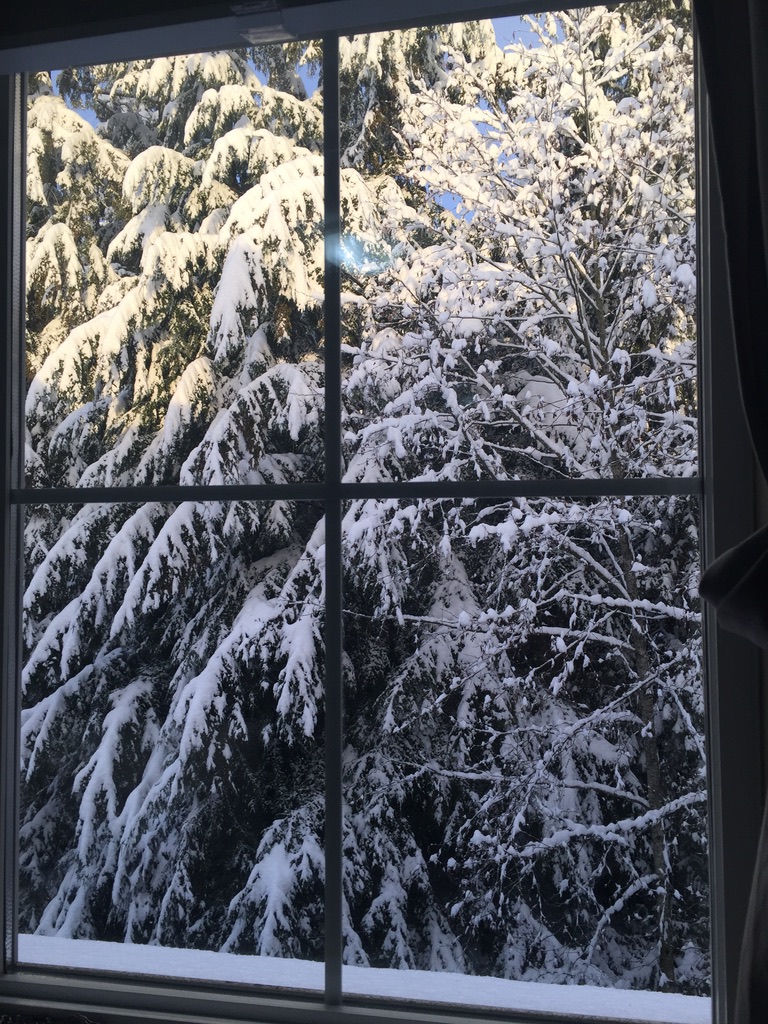
It’s March. The week of March 9 was the first time this year that it snowed here where we live. (Elsewhere, of course, they were inundated.) As a result, I’ve had snow on my mind. Snow comes down, looks like a white miracle – covering all the ugly stuff on the ground – and then goes away, disappears leaving nothing but puddles. The mere fact that it falls is a result of a remarkable confluence of events – it must be cold enough, for long enough, and cloudy-with-snowclouds enough. People who live where it snows, know snow. They know what it is and looks like and what you do about it. And snow, of course, is an apparition – it looks white but it actually isn’t. It takes on all the colours of what is around it. And snow is different depending on where it falls, for instance, on the sea, on trees, on buildings, on the edges of mountain peaks, on people.
To put this phenomenon into words in Fiction takes some doing. The nature of snow is expressed easier in poetry than in prose. You could describe it in a factual way, but you’d be missing out on conveying the magic. Here are some of my favourite descriptions of snow in novels, where the authors beautifully depicted the wonderfulness of snow.
Hamnet and Judith, by Maggie O’Farrell
There is an unforgettable moment in Maggie O’Farrell’s novel, Hamnet and Judith, where she describes a child hiding in the snow. Every time that I read those lines, I think of how accurately she describes the snow, and the small body covered by it.
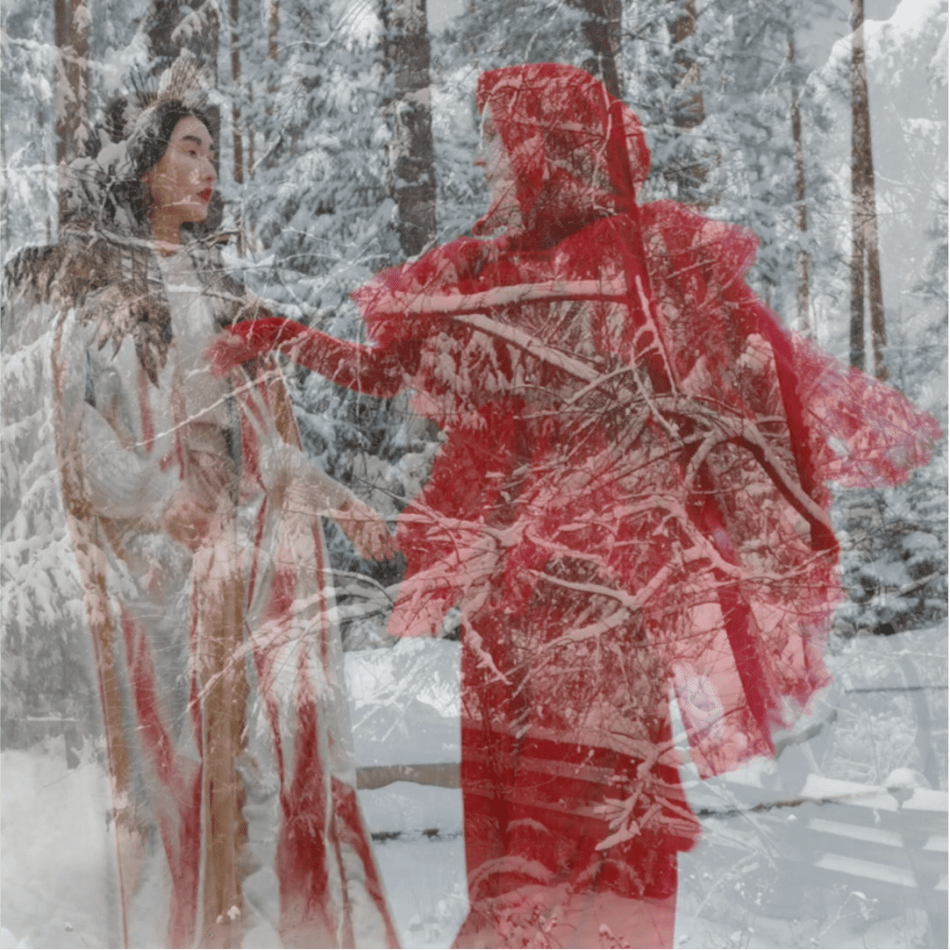
“Hamnet, in his place of snow and ice, is lowering himself down to the ground, allowing his knees to fold under him. He is placing first one palm, then the other, on to the crisp, crystalline skin of snow, and how welcoming it feels, how right. It is not too cold, not too hard. He lies down; he presses his cheek to the softness of the snow. The whiteness of it is glaring, jarring to his eyes, so he closes them, just for a moment, just enough, so he may rest and gather his strength. He is not going to sleep, he is not. He will carry on. ” (p. 251)
Of course, it takes someone from Iceland to precisely observe how snow looks and describe it in such a way that you think that you see it in your back yard. Sjón, born and raised in Iceland, knows the snow, the volcanoes, the lava fields, and the frozen rivers and waterfalls of that island where, even in summer, there are reminders of winter.
The Blue Fox, by Sjón
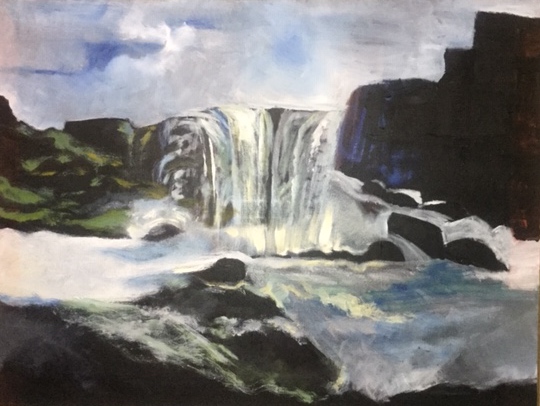
“Ghost-sun is a name given by poets to their friend the moon, and it is fitting tonight when its ashen light bathes the grove of trees that stand in the dip above the farmhouse at Brekka. […] The rowan draws shadow pictures on the snow crust; there’s a low sough in the naked boughs and the odd twig still bears a cluster of dried berries that the birds over-looked last year.” (p. 71)
I will always have in my mind the words of Dylan Thomas, when he wrote about snow in his two famous books, A Child’s Christmas in Wales, and Under Milk Wood. Here are a few of his lovely words.
A Child’s Christmas in Wales, by Dylan Thomas
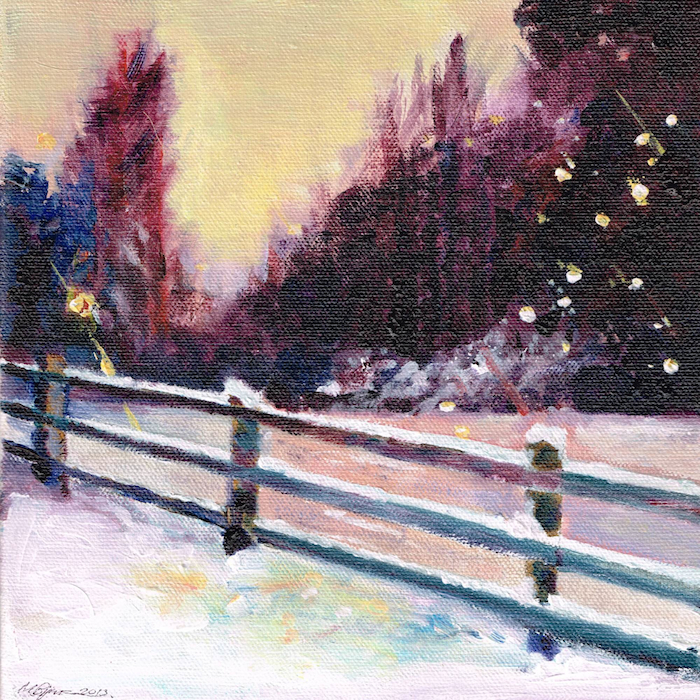
“Looking through my bedroom window, out into the moonlight and the unending smoke-colored snow, I could see the lights in the windows of all the other houses on our hill and hear the music rising from them up the long, steadily falling night. I turned the gas down, I got into bed. I said some words to the close and holy darkness, and then I slept.”
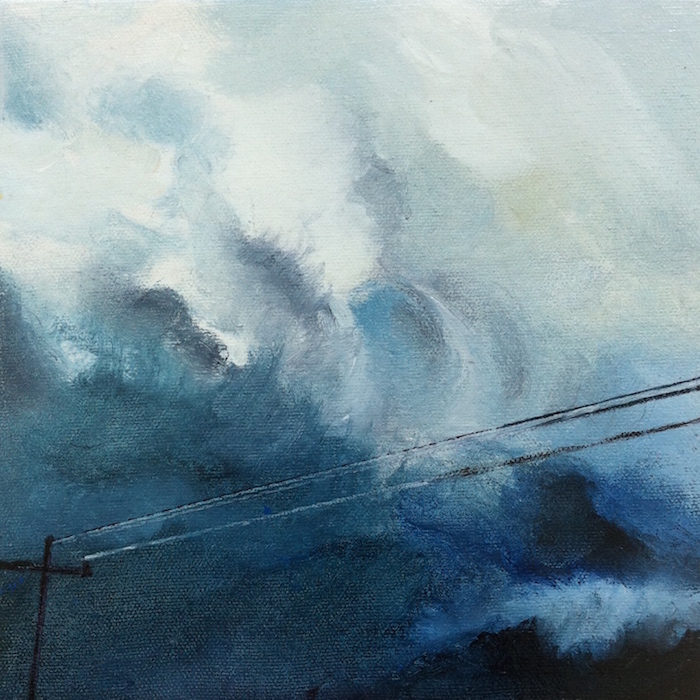
“All the Christmases roll down towards the two-tongued sea, like a cold and headlong moon bundling down the sky that was our street; and they stop at the rim of the ice-edged, fish-freezing waves, and I plunge my hands in the snow and bring out whatever I can find.”
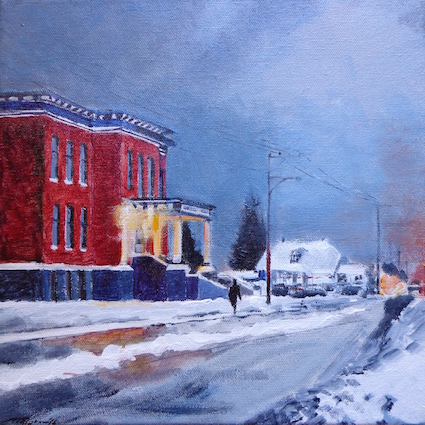
“Our snow was not only shaken from whitewash buckets down the sky, it came shawling out of the ground and swam and drifted out of the arms and hands and bodies of the trees; snow grew overnight on the roofs of the houses like a pure and grandfather moss, minutely ivied the walls and settled on the postman, opening the gate, like a dumb, numb thunderstorm of white, torn Christmas cards.”
Under Milk Wood, by Dylan Thomas
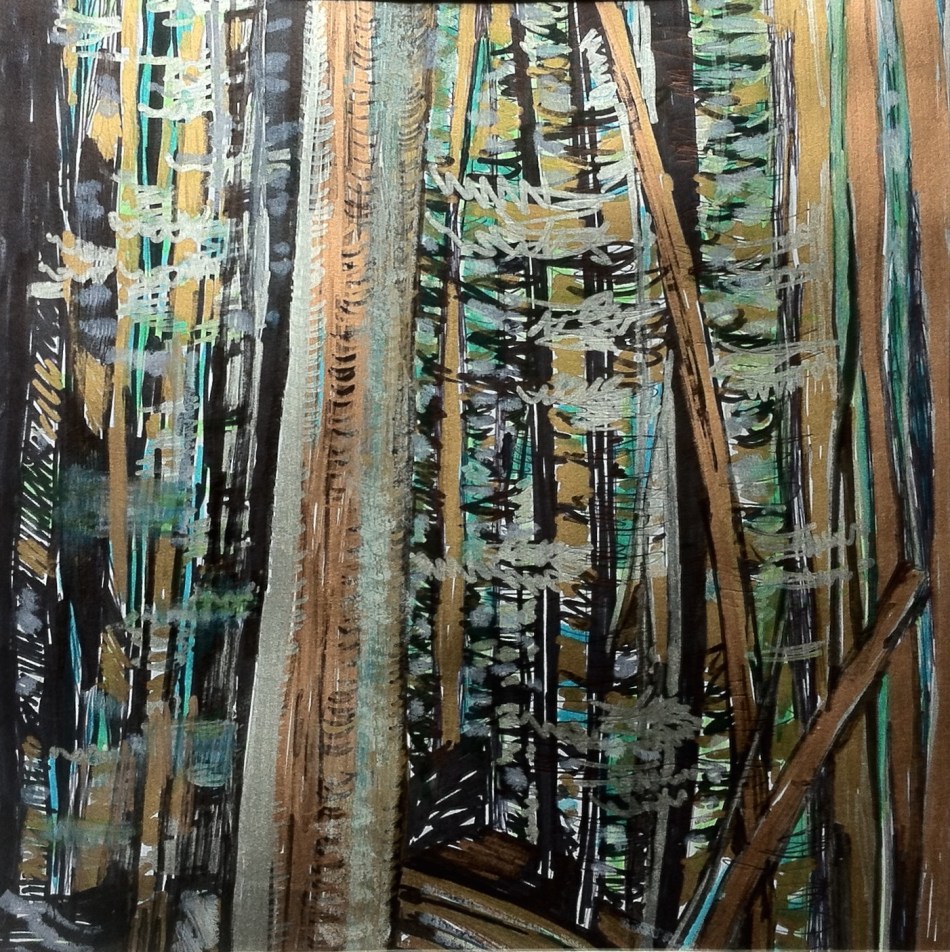
“Listen. It is night moving in the streets, the processional salt slow musical wind in Coronation Street and Cockle Row, it is the grass growing on Llaregyb Hill, dewfall, starfall, the sleep of birds in Milk Wood.“
Isn’t that wonderful? A snow-covered world has its own strange bright light, even at night. Thomas was not writing about snow in Milk Wood here – it is summer. But when it’s “…night moving in the streets…”, and I look up and see the snowflakes drift and tumble to the earth like a rain of stars, I always think, borrowing Thomas’s words; it’s a dewfall, a starfall, a snowfall.
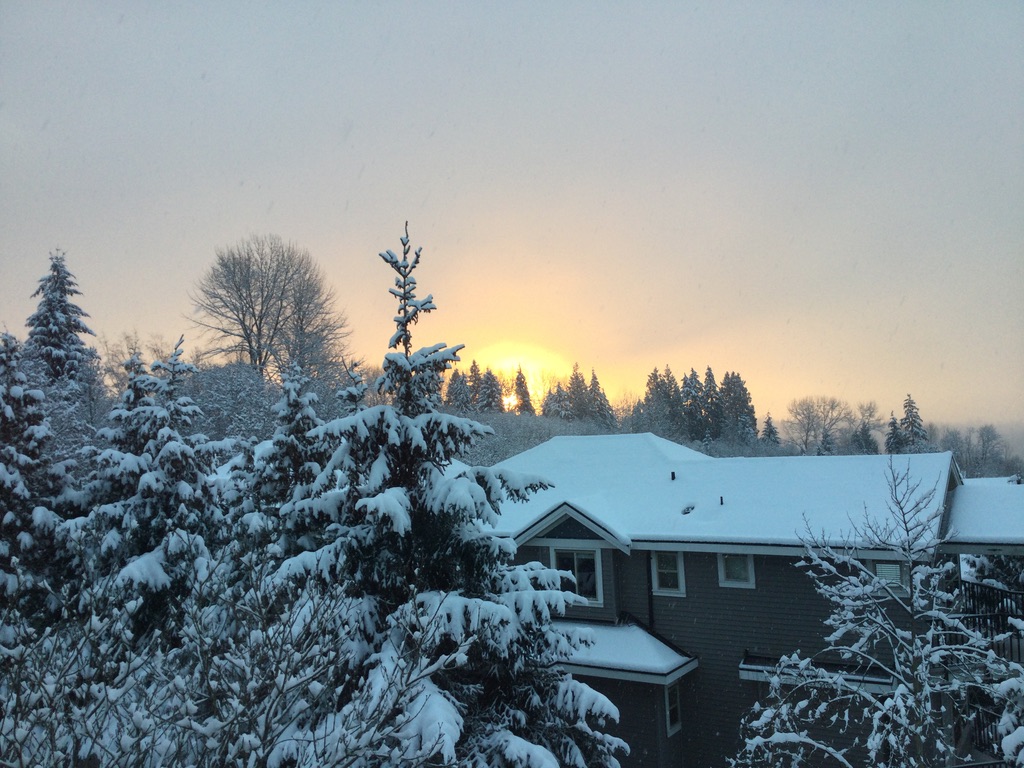
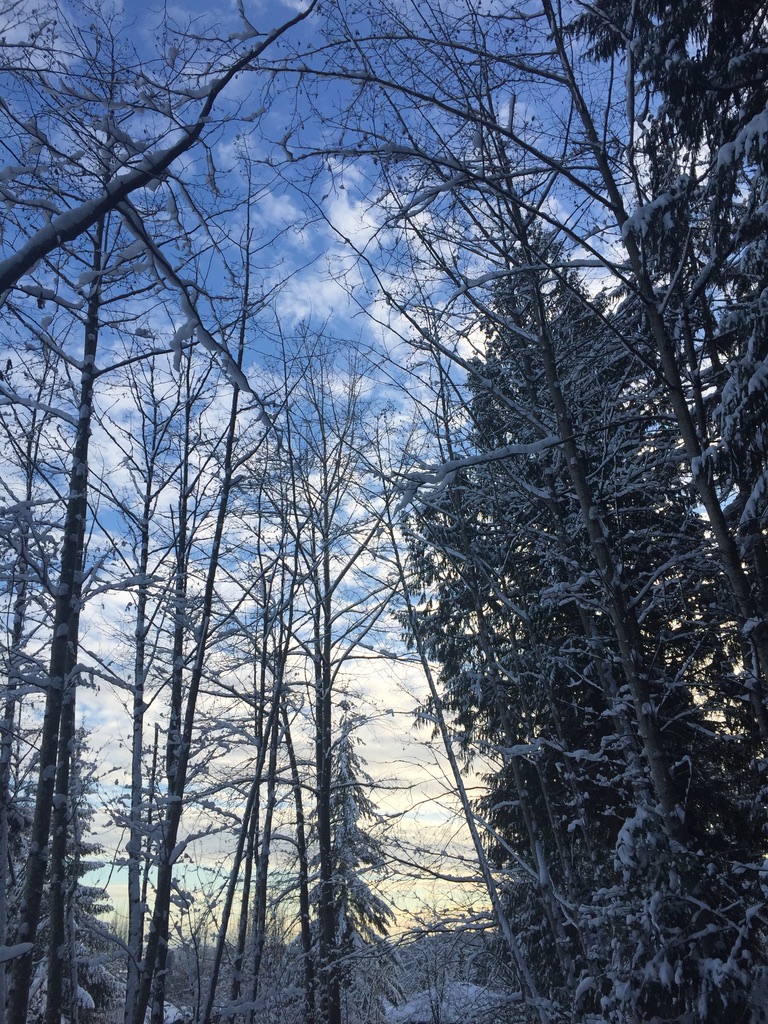
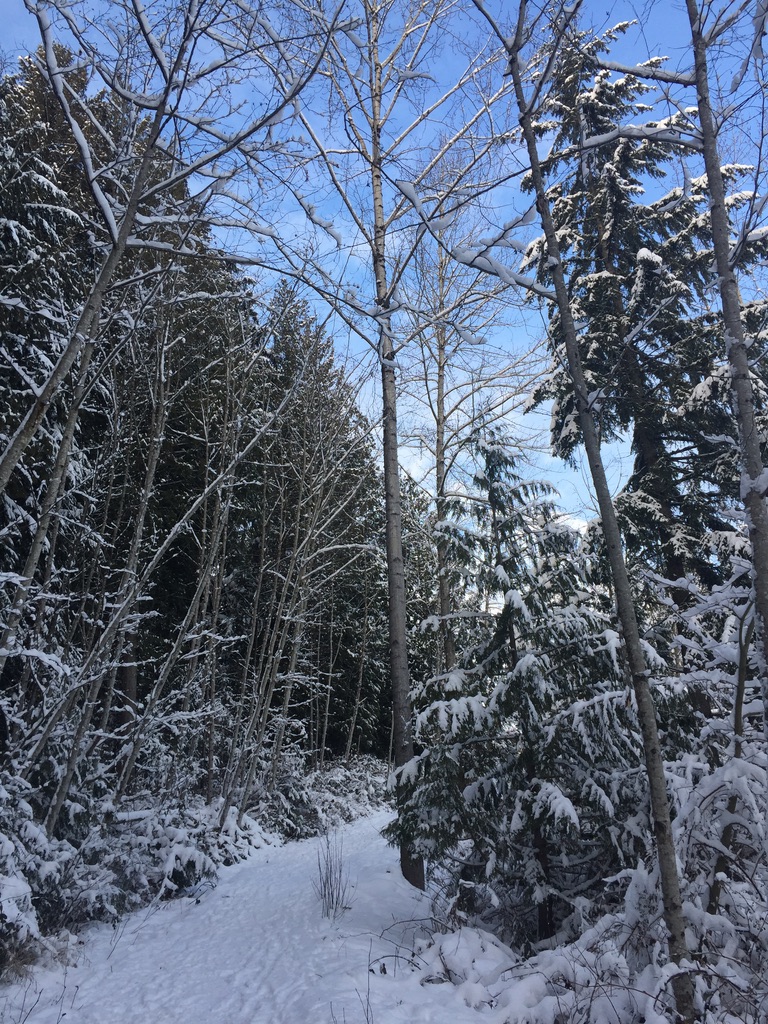
PS The paintings are by me, from long ago. The picture with The Blue Fox quote is of Gullfoss, meaning Golden Falls, in Iceland. The photos were taken where we live.
 SEVEN CIRCUMSTANCES
Sover as wat ek lees, dink ek aan jou pragtige gedig “The Colours of Cold” – en toe verskyn daardie inskrywing onderaan hierdie een, tot my groot vreugde.
En jy onthou dit! ❤️