
My gift list never changes. I’d always like; 1. Something that’s been made just for me. 2. Same. 3. Ditto. 4. Ibid.
I have all the things I need, and all the things that I want. I have a surfeit of THINGS. I don’t want any more things. I want a gift that is proof that someone thought about me, spent some of their own time making something for me, and understood that the meaning of what they give me is more important than its value. So, make me something if you want to give me something.
Paint me a picture. Sing me a song. Write me some music. Write me a poem. Plant me a plant. Put something that’s alive in the ground for me, and watch it grow. Send me a photo when it blossoms. Write me a letter! (Yes, please!) It doesn’t matter that what you give me is not a huge artistic achievement, or worth a lot of money. It matters what thoughts and feelings you put into it. The value to me is sentimental and symbolic.
The perfect present for a letter-and-cat-lover
I love getting personal letters that are pleasant (of course). Unfortunately, most of the time all I get in my snail mail and inboxes are dry and depressing business communiques. So, when I discovered a book which consists of a collection of letters about cats, I was as happy as a cat snorting catnip. I hereby present to you, dearest fellow book-and-cat-lovers, Letters of Note: Cats, by Shaun Usher.
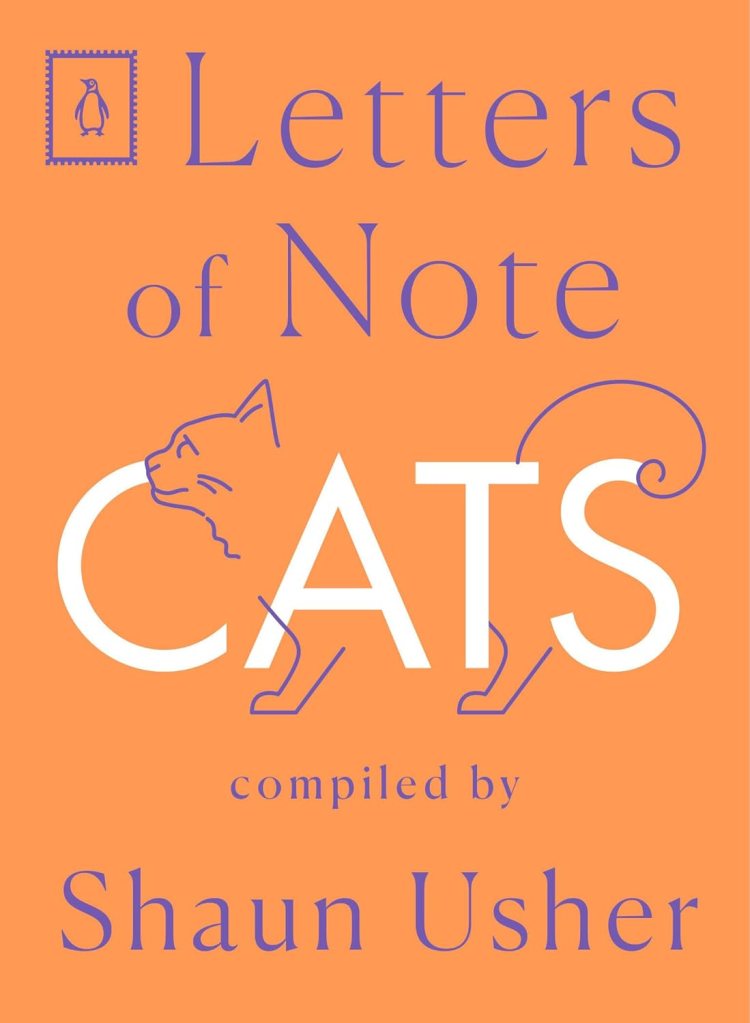
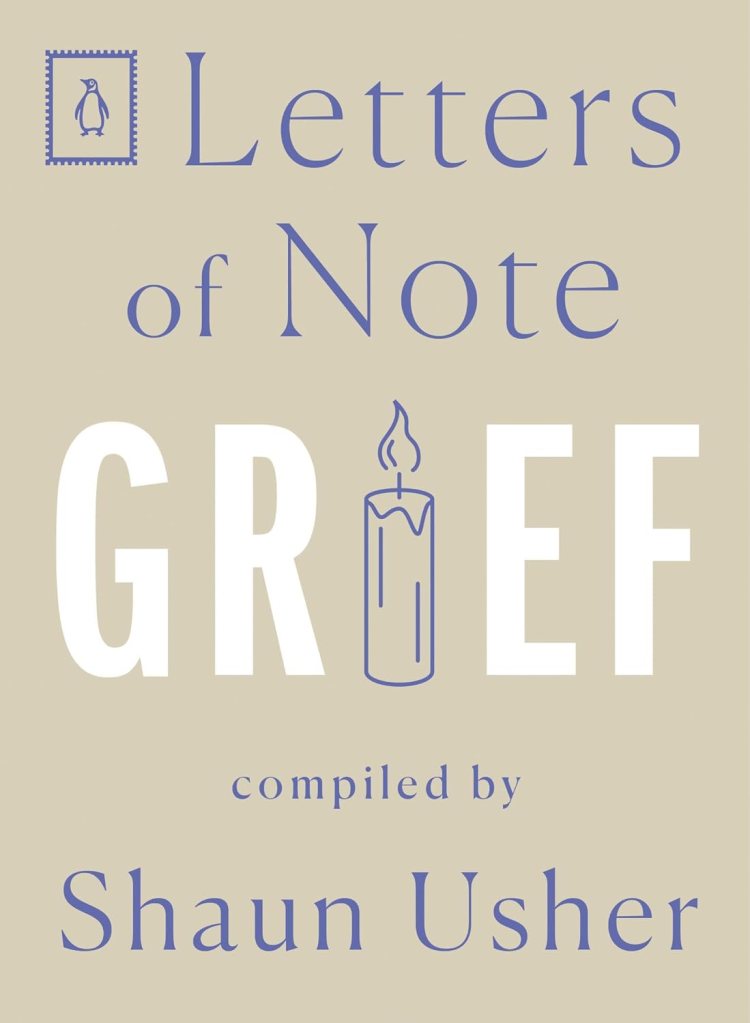
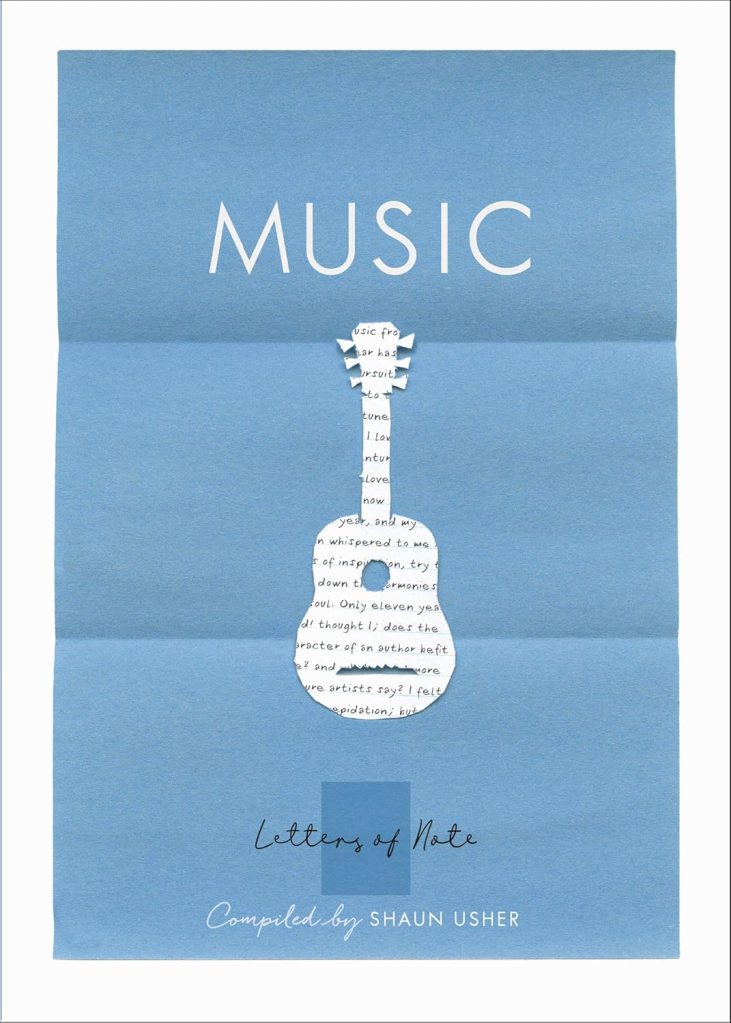
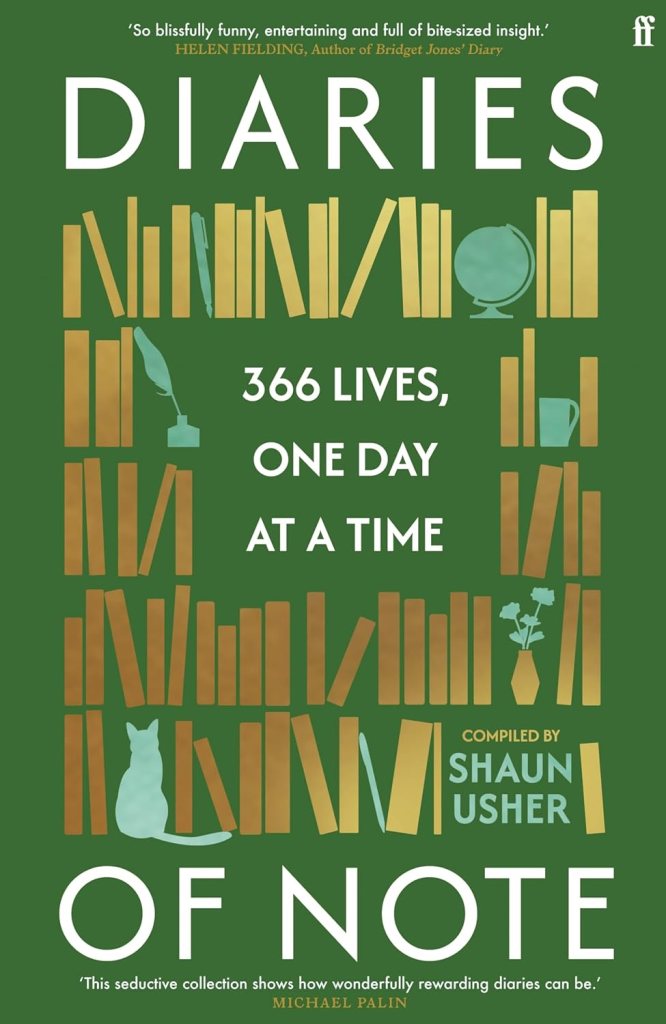
Usher has nailed down this category of Literature with his “Letters of Note” initiatives, which he launched in 2009. He has not only published many variations on the theme, he also has websites, forums, chat groups, an IG feed, publishers worldwide, translations, and a stage show. Whatever medium you prefer, and whatever your particular affinity is (cats, dogs, music, outers space…), you can get a matching volume of Letters of Note by Shaun Usher. It’s quite a phenomenon. He œuvre includes Lists of Note, and Diaries of Note: 366 Lives, One Day at a Time, which is coming out on Oct. 9, 2025 in hardcover.
More than a compiler
And if you think that he is simply basking in the reflected glory of the private words of famous dead people, and that it must have been easy to write, think again. To have found and connected these correspondences (always at least two parties are involved with every letter) must have taken an absolutely monumental amount of sleuthing, Archeology-level document dissection and translation, and a mind-boggling knowledge of the private lives of a wildly diverse range of people. (Not to mention the headache-inducing effort to get the publishing rights for each document.)
Interesting details
In every Letters of Note anthology, each letter is accompanied by succinct profiles of the writers and recipients whose letters are featured, as well as an even more succinct description of the events preceding, and following, the letter, or letters. In Letters of Note: Cats, there are 27 such profiles. He really has a knack for pithy, focused descriptions, because he gets the detail and the drama into a few short paragraphs. These introductions make the reader anticipate the very interesting writing on the following pages.
Another feature is one sentence or phrase that he extracts to highlight in each correspondence. It makes you wonder about what it could possibly involve, and why it is more important than all the other things that the writer mentions. For instance: “The zombi”, or “It is like living in a state of siege”.
Specifically, letters of note about cats…
The contents of each collection is fascinating, Letters of Note: Cats, particularly so. In Letters of Note: Cats, as in the other collections, Usher has transcribed the letters, including those that are not in standard English. One, letter no. 4, is in “cat-speak”, and this is what the writers said that cats sing in cat choruses. You have to read it out loud, and largo, slowly:
“Chorus:
Qu-ow, wow, quall, wawl, moon.”
“Chorus: ― Largo
Waal, woee, trone, moan, mall, oll, moule.”
Sounds like cats, yes? You’ll notice, no miaows, because the writers, and I, think that the sounds that cats make are more varied and musical than simply miaowing.
Some letters were written during a crisis in the writer’s life, such as the grieving letter from New Zealand author, Katherine Mansfield. Others are significant because we know something about the letter writer’s life at that time, such as the unexpectedly tender letter from Florence Nightingale.
Sometimes the letter was written in older English, for instance, a missive from 1747, but it is nevertheless easy to understand. Quite a few are in an idiolect, to use the Linguistic term, for example, the informal and pensive letter from Gabrielle-Ange Lévesque, to her son, the writer Jack Kerouac, which Usher has quoted verbatim. The letters are sometimes downright strange, because of who the writer is, or because of what they wrote, such as the weird letter about the “Cat-Organ”.
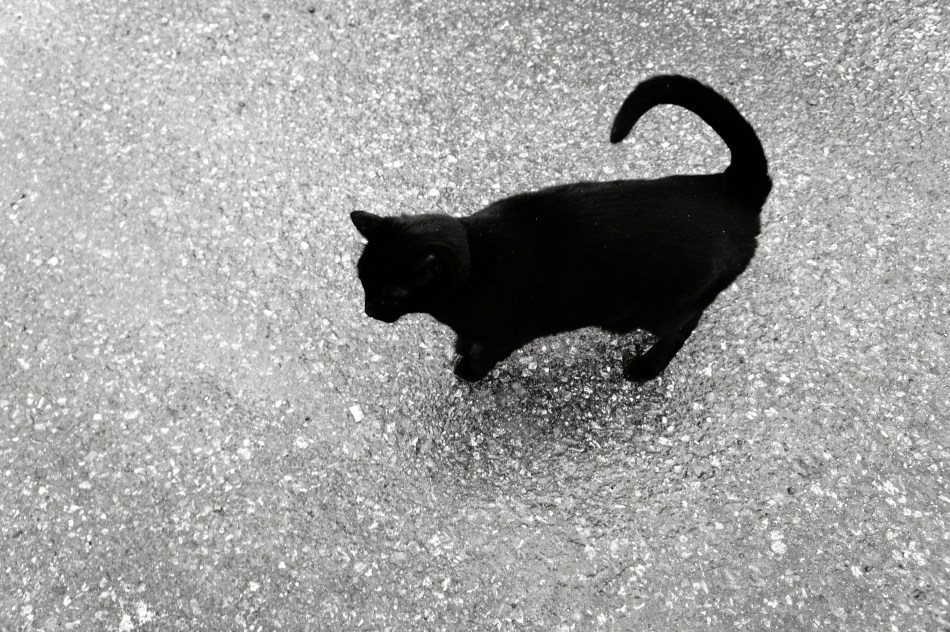
I never knew how the people in the book felt about cats, how the correspondents knew each other, how their cats were acquainted (yes!), how their cats connected them, or even how their cats inspired their art.
Photo © 2013 Mike O’Brien
I enjoyed all the letters. But two stood out for me; one, from the actor Jack Lemmon, because it is crazy and funny, and the other from the actor Elizabeth Taylor, because I had no idea she could write such poetic and heartfelt words. Her letter is one of a few in the book that has no intended human recipient.
Letter 1 – Jack Lemmon to Walter Matthau
Letters of Note: Cats, p. 13 – To the worriers out there, he was joking.
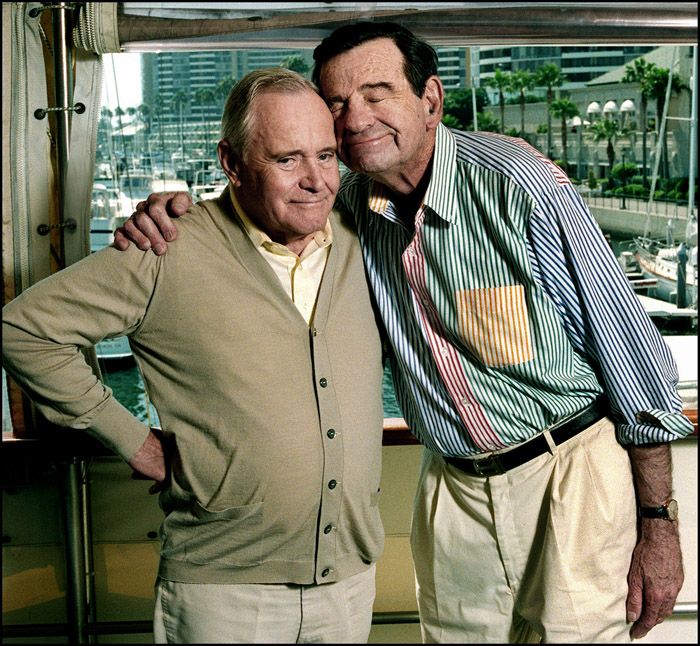
Best friends in real life, Jack Lemmon (left) and Walter Matthau (right), in the 1990s.
“December 23rd, 1988
Mr. Walter Matthau
278 Toyopa
Pacific Palisades
California 90272
Dear Waltz:
I know you’re always interested in looking for opportunities for investment.
I don’t know if you would be interested in this, but i thought I would mention it to you because it could be a real “sleeper” in making a lot of money with very little investment.
A group of us are considering investing in a large cat ranch near Hermosillo, Mexico. It is our purpose to start rather small, with about one million cats. Each cat averages about twelve kittens a year: skins can be sold for about 20¢ for the white ones and up to 40¢ for the black. This will give us 12 million cat skins per year to sell at an average price of around 32¢, making our revenues about $3 million a year. This really averages out to £10 thousand a day – excluding Sundays and holidays. […]
Now, the cats would be fed on rats exclusively. Rats multiply four times as fast as cats. We would start a ranch adjacent to our cat farm. If we start with a million rats, we will have four rats per cat each day. The rats will be fed on the carcasses of the cats that we skin. This will give each rat a quarter of a cat. You can see by this that this business is a clean operation – self-supporting and really automatic throughout. The cats will eat the rats and the rats will eat the cats and we will get the skins.
Let me know if you are interested. […]
Love, Jack.”
Letter 2 – Elizabeth Taylor to her missing cat, Cassius, 1974
Letters of Note: Cats, p. 50
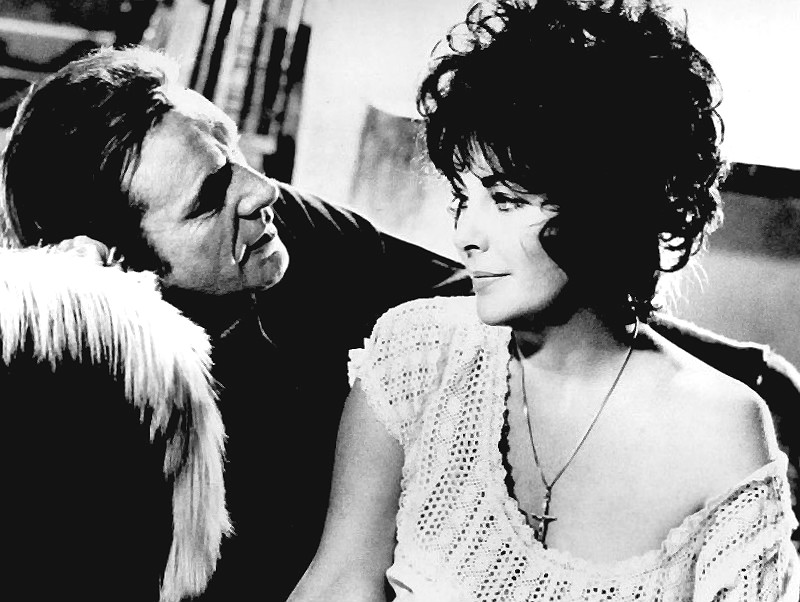
Elizabeth Taylor and Richard Burton in Divorce His, Divorce Hers (1973), Taylor’s last film with Burton. She wrote the letter, below, a year after this.
“Letter to my Lovely Lost Cat
I see you, my beauty boy, in the reflection of those shining black-brown rocks ahead of me. I see the green o’ thy eyes in every rained, sweated leaf shaking in my eyes.
I remember the sweet smell of your fur against my neck when I was deeply in trouble and how, somehow you made it better – you knew! You knew always when I hurt and you made comfort for me, as I did once for you when you were a broken kitten.
Anyway, I love you Cassius – and thank you for your beauty.
Please come back!”
Read more letters
If you want more letters to entertain, provoke, gladden, or make you think, read any of Usher’s anthologies. They are like bags of treats into which you reach, and who knows what you may come up with – a sour-ball, a sticky toffee, or a candy heart. Start anywhere, with any letter, and you will be surprised by each one.
Shaun Usher has done a good thing for the Literary world by elevating these correspondences to the status of worthwhile reading, and by showing us unexpected aspects of people who we thought we knew all about.
He says in the Introduction of Letters of Note: Cats, that the reader should go and write a letter, and send him a copy. I’m still considering whether I should. Would you?
All the Letters of Note so far

Diaries of Note: 366 Lives, One Day at a Time (Oct. 2025)
Letters of Note: Grief (2022)
Speeches of Note (2021)
Letters of Note: Dogs (2021)
Letters of Note: Fathers (2021)
Letters of Note: Sex (2021)
Letters of Note: Outer Space (2021)
Letters of Note: New York (2021)
Letters of Note: Mothers (2020)
Letters of Note: Love (2020)
Letters of Note: Art (2020)
Letters of Note: War (2020)
Letters of Note: Cats (2020)
Letters of Note: Music (2020)
Lists of Note (2015)
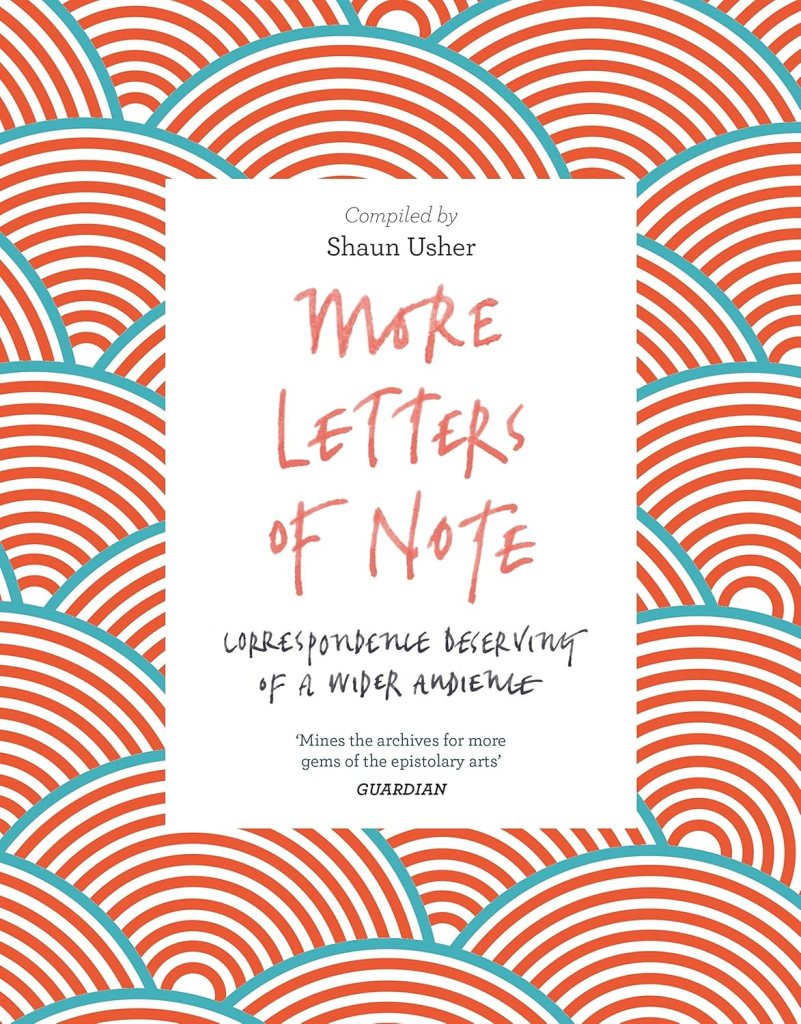
More Letters of Note: Correspondence Deserving of a Wider Audience (2015)
Letters of Note: Volume 2: An Eclectic Collection of Correspondence Deserving of a Wider Audience (2014)
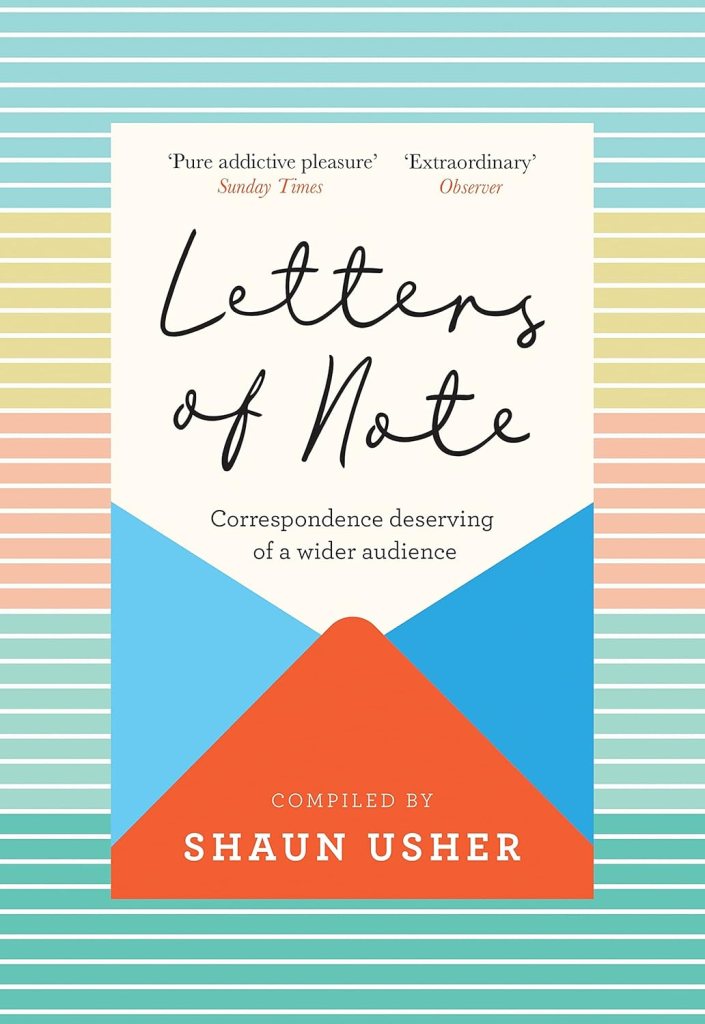
Letters of Note: Correspondence Deserving of a Wider Audience (originally published in Oct. 2013, reprinted in 2021)
Letters of Note started in 2009 with the launch of lettersofnote.com.
The Letters Live stage show was first performed in 2013, and can be found at letterslive.com
Substack: https://news.lettersofnote.com/
Website: https://news.lettersofnote.com/t/thelettersof
Website: https://shaunusher.com/
IG: https://www.instagram.com/shaunusher
Another substack: https://www.listsofnote.com/
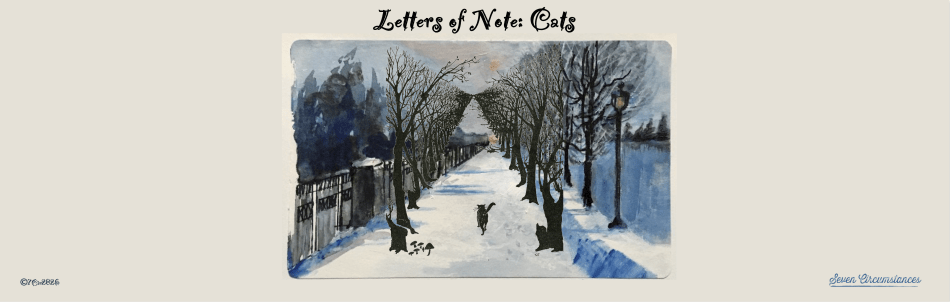
The header: A little watercolour of an avenue in Calgary, AB, by me, with the illustration of “The Cat That Walked by Himself”, overlaid on it. The Cat that Walked by Himself, from Just So Stories, p. 165, 1926 ed., by Rudyard Kipling (1865-1936). The drawing is by the author, Rudyard Kipling. You can just make out his initials, RK, in the bottom right-hand corner.
 SEVEN CIRCUMSTANCES
0 comments on “If you like cats and personal letters, here’s a treat: “Letters of Note: Cats””