
This is for all the people who make and sell their creations, the things they work at every day. Publication, sales, and distribution are tricky parts of any business, even more so when what you’re selling is art. When it’s art, you have to deal with categories, and with genres.
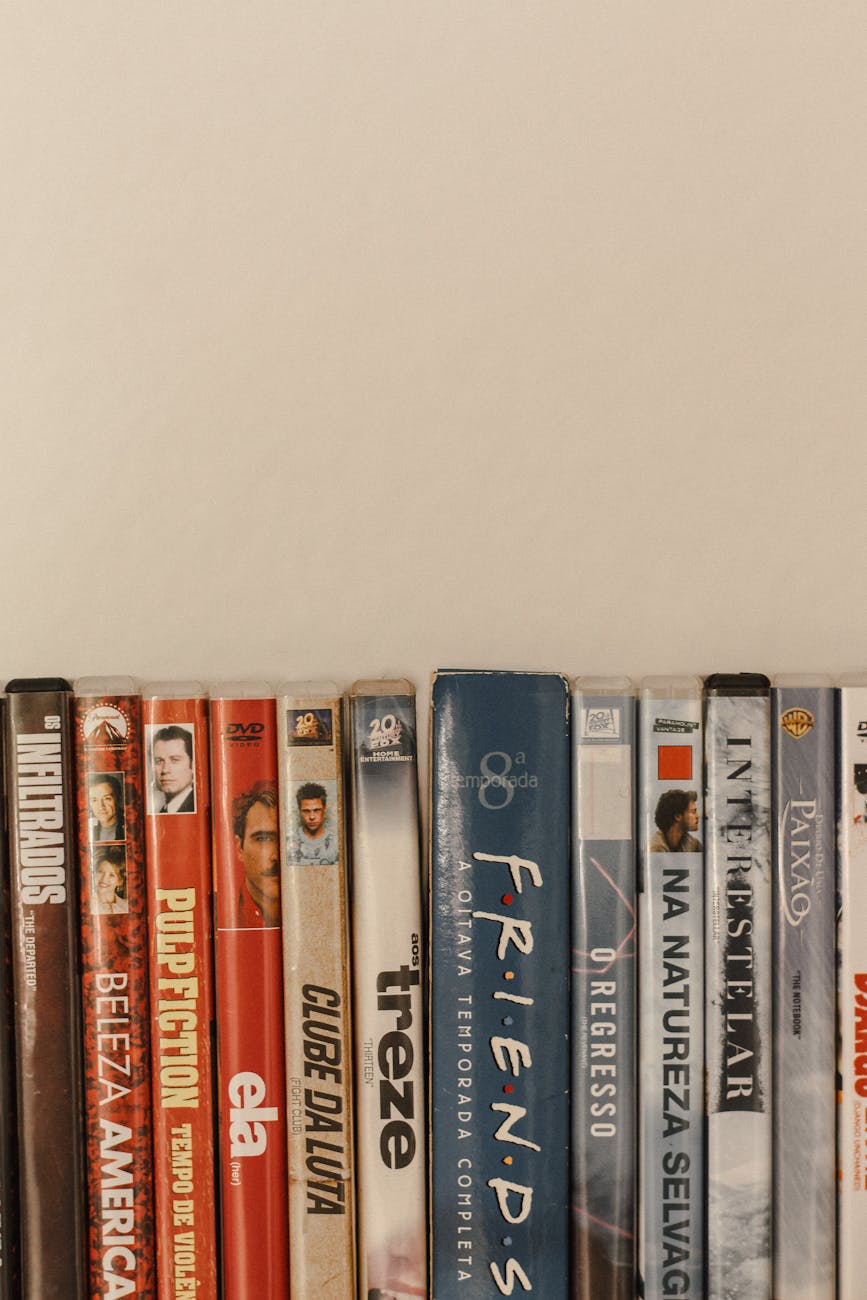
Genre
noun [ C ] formal
uk /ˈʒɑ̃ː.rə/ /ˈʒɒn.rə/ us /ˈʒɑːn.rə/
a style, especially in the arts, that involves a particular set of characteristics
a particular subject or style of literature, art, or music: the genre of landscape painting
Genre
adjective
uk /ˈʒɑ̃ː.rə/ /ˈʒɒn.rə/ us /ˈʒɑːn.rə/
produced according to a particular model or style: a genre movie, genre fiction
You have to answer the question, where does my work fit in? In which genre does it fit? The minute your work leaves your desk, your studio, or your production facility, and you want to share it with the world, this question has to be answered. And in most cases, you can only state where your work fits in once. When it’s done, it’s done.
However, it is important to do it, and do it right. Because where it fits determines who will read, hear, see, or, eventually, buy it. Putting your work in a genre ringfences your market. And it’s as simple as making a decision and adding a few labels. But that’s also what makes it difficult.
The next couple of posts I’ll give some context and information about this. I’ve learned some hard lessons about genres and I’ve made many mistakes that have caused my songs to disappear from the market forever, like sinking into a swamp. Don’t be as stupid as I’ve been. Take what I say and figure it out some more yourself. There are other people who know a heck of a lot more than me about this!
I now understand that genres have a lot to do with numbers as identifiers. Laying out this argument in a logical way and explaining how it all hangs together, took me quite while, and so there are four parts to this story.
Part 1 – You need genres, but…
I go into this every time that I put the picture of a book cover on my blog, and add the publishing details, which includes what the book is. I have sometimes thought that the genre into which the publisher or the author fitted the book doesn’t quite match the contents. An example would be, Darby, Love, which is primarily classified as Poetry, though I wouldn’t call it that. I think it would fit better into the category of Memoir, or Letters.
While checking up on Letters of Note: Cats, I noted that Shaun Usher’s Letters of Note series, is, firstly, in the genre of Literary Letters and Correspondence. This genre is not a random, made-up thing. The genre into which a book, artwork, or music album fits, is precisely what gives the buyer advance notice of what to expect, and whether or not they would like it.
However, making something that you have created fit tidily into a genre category is not easy to do.
Wordles, schmordles
There are some words that are used interchangeably by platforms and organizations, and that you, the maker, needs to understand if you are going to sell your creations; category, niche, genre, class, and division. That’s a whole lot of finicky terms.
For instance, Amazon has a range of categories of books which is vast, and comprise over 10,000 specific niches or genres grouped into these categories. The categories and genres for published books used, by Amazon for instance, align with (are basically the same as) the classes of the Dewey Decimal Classification (DDC) system. The DDC is used to classify the entire body of knowledge that exists in the world. That is a pretty awesome fact.
The DDC, where this whole thing started, is organized hierarchically into 10 main classes, 100 divisions, and 1,000 base sections, covering areas of knowledge numbered from 000 to 999. While there are 1,000 base sections, the system allows for an infinite, highly specific expansion of numbers after the decimal point – which is why it’s called the Dewey Decimal System, to classify granular topics (e.g., “567.91290228”).
The DDC works like an identifier: something has been numbered, therefore it exists in a category, and fits. Once something has been categorized, it can be given a genre label. Which is where the devil gets in the detail.
 SEVEN CIRCUMSTANCES
0 comments on “Do you know where your work fits? Part 1 – You need genres, but…”