
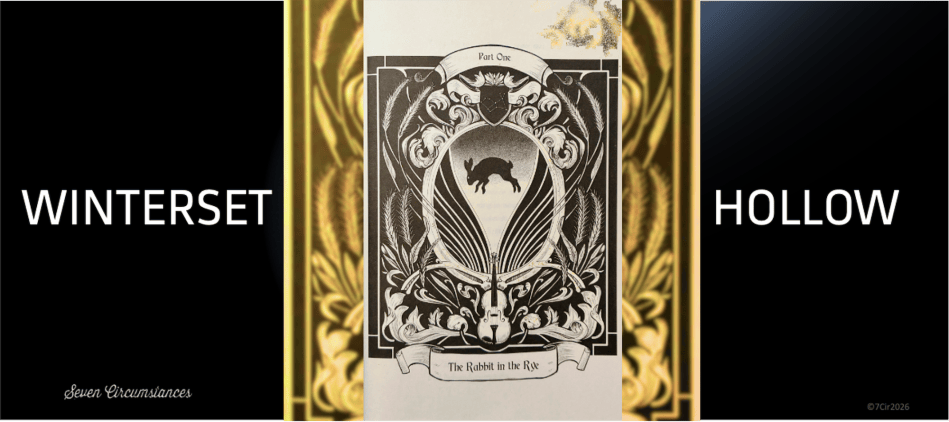
The second edition of Winterset Hollow, by Jonathan Edward Durham, was published in October 2026, to enormous acclaim. I follow the author on IG and wondered what the fuss was about. People were raving about it. Comments about the book on IG was blowing up with heart emojis and highly excited praise. So I got it and read it.
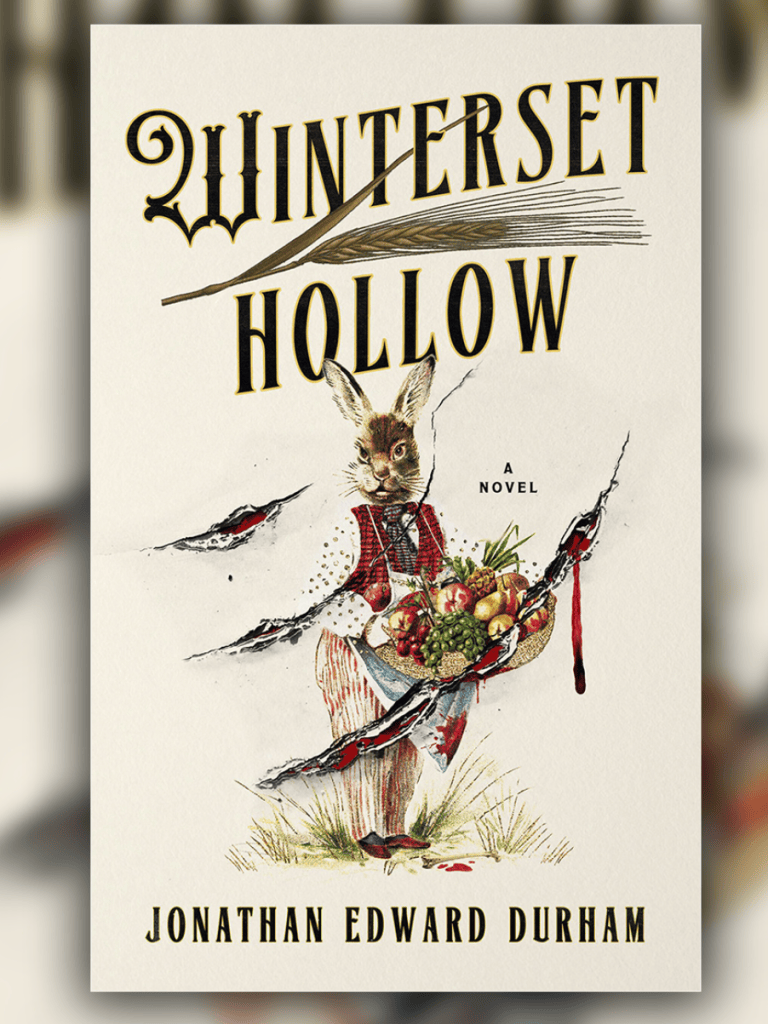
Winterset Hollow – Very good, and surprising
I’ve concluded the comments and praise are not overstated ⏤ it is really very, very good. I have rarely been so completely surprised by a novel, even a Science Fiction one. It is unputdownable, unforgettable, clever, frightful, terribly moving, troublesomely thought-provoking, intricate in plot but elegantly structured, and written in tight, flowing, yet poetic style.
My advice? Do yourself a favour ⏤ get it and read it. Once I started reading it, I literally could not stop, and having read it three-quarters through, found myself, hours later, with the housework not done, the business not managed, and dinner uncooked.
It’s nothing usual
At first glance, Winterset Hollow is about a group of people who go on a pilgrimage to visit the abandoned island home of a fictional famous writer, “E.B. Addington”. They are mad keen fans of Addington’s book, “Winterset Hollow” (the fictional book embedded in the narrative), with which they had grown up, and know practically by heart. So far, so normal. They take a boat out to the island, giving the reader a brief introduction to who they are.
And that’s where the normality stops. The boat docks and they get off and take a walk to the abandoned mansion, which has a high fence around it and a locked gate. And then things get weird. Weird! And tricky. Normality goes out the window and the surrealism of the situation floods the reader.
Embedded narrative
An important point: This novel has another story, “Winterset Hollow“, embedded in it, in the form of an epic allegorical, narrative poem. In this magnum opus of a novel, Jonathan Edward Durham has written a Horror Fantasy, and two narrative poems in one book. One poem forms part of the narrative, introducing the story’s sections, forming part of the dialogue of the characters, and intertwined with the plot. The other is the full, illustrated version of the poem, reproduced (if you can call it that) after the end of the story, making up the last few pages of the book. This poem, “Winterset Hollow”, is like a mirror of what happens to the characters. So you do actually have to read it, whenever it’s mentioned.
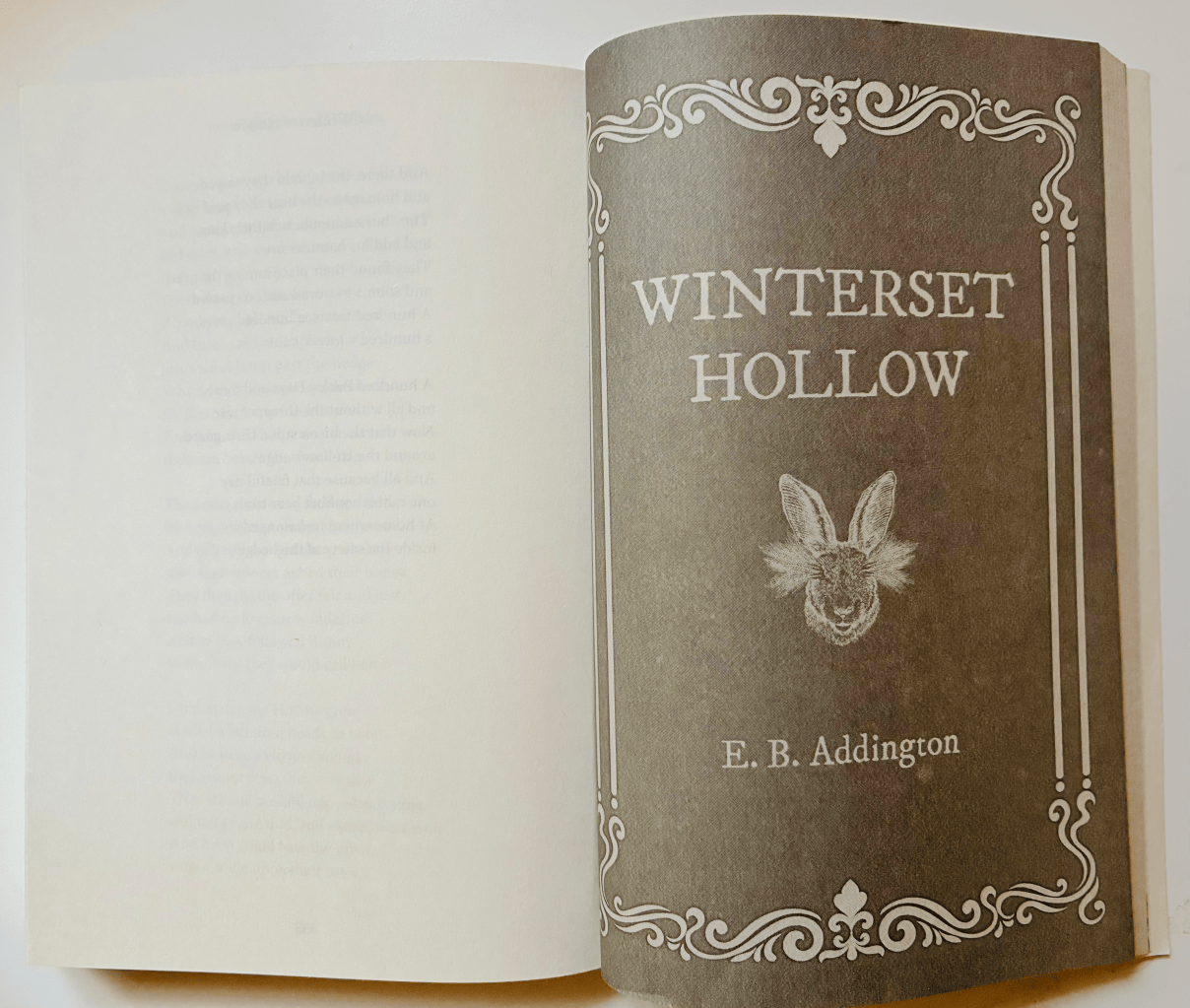
An epic poem
When writers switch between genres, often they are better at one of the two. But Durham is excellent at both. The poems have verses consisting of 8 lines each of 2 quatrains, but the rhyme scheme is interesting: It’s AABC-DDEC. Note the bolded letters.
A rhyme scheme of AABC DDEC is used across pairs of four-line stanzas (quatrains) where the first two lines rhyme with each other (AA or DD), the third line introduces a new unrhymed sound (B or E), and the fourth line rhymes back with the third line of the subsequent stanza or shares an interlocking chain pattern. A famous example of this structure is Henry Wadsworth Longfellow’s poem “Afternoon in February”, where each stanza follows an AABC-style lyrical flow that links into the next verse. Here is an example:
"A hundred Barley Days and more,
and all without the threat of war
Now that the bison stood their guard
around the Hollow's edge
And all because that fateful day
one rabbit couldn't bear to stay
At home where he belonged
inside the safety of the hedge"

Winterset Hollow,  p. 333
You might think, so what? But the fact that the verse has the pattern of an interlocking chain, is actually part of the book’s central theme of being tied to the past, literally and figuratively. The poem ⏤ a tale of a group of animals, their celebration of “Barley Day”, and the disastrous events that happen ⏤ starts off as bucolic and soon devolves into something horrifying, much like the events that follow when the protagonist, “John Eamon Buckley”, and his friends, land on the island.
There’s a lot of blood
Dear readers, I do not often flinch at horror or carnage in books, but, good Lord, I have rarely read such viscerally disturbing descriptions of violence, death and torture as in this novel. There is a lot of killing, and there is a lot of shiver-inducing absolutely wacko fantasy.
The story wanders along peacefully, until the protagonist, “John Eamon Buckley”, who goes by “Eamon”, and his two best friends, wander way from the group, find a hole in the fence surrounding the mansion, and decide to go in.
You know that feeling you get when you watch a film in which two hapless people have a car accident in the middle of nowhere and they decide to ask for help at a nasty-looking house? And the guy who opens the door has terrible green teeth and cross-eyes and dragging knuckles? And all you want to do is scream at them, “Nooooo! Run! Run away!” And they don’t? And they die? Well, this moment in the novel is like that. But how should the hapless island visitors know what is going to happen to them? I was silently screaming at them: “No! Don’t go in! Run!” But they don’t, and the front door opens.
No cute li’ll bunny wabbit
In the novel Mr. Vertigo, by Paul Auster, there is the moment that he describes the narrator starting to lift off and fly, defying physics. He does it so well that the reader is convinced. The reader does not have to suspend their disbelief a lot.
Similarly, that moment in Winterset Hollow is on p. 47, at the end of Part 1, when Eamon and his friends come face-to-face with the creature on the cover of the novel, who (that?) opens the door.
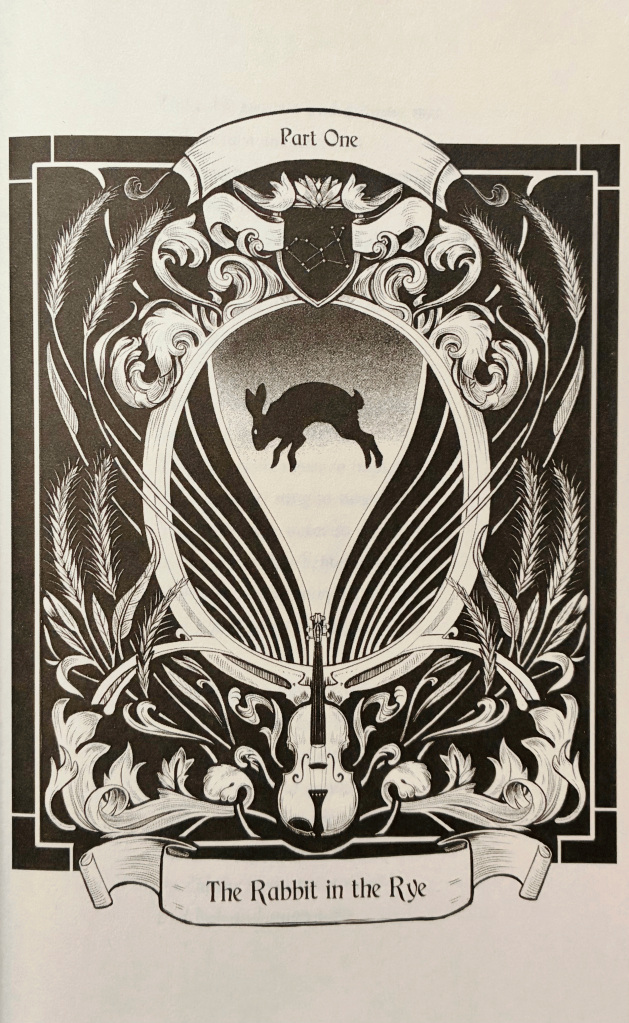
“And all of a sudden, before him stood one inarguable answer, and a hundred burning questions.
He was an old rabbit. His fur was gray and ragged, and his whiskers had turned spindly and overgrown. And it was clear from his delicate posture that his bones had seen many miles.
He was just as tall as Eamon, and somehow just as human, as there was real grace in the way he adjusted his spectacles and looked his guests up and down.
[…]
‘Good evening,’ he said. “Runnymeade Rabbit, at your service.'”
(Winterset Hollow, p. 47)
A rabbit. Life-size. Wearing spectacles and clothes. Talking. It is a surreal moment. Durham segues so smoothly from the real world into this world in which fictional animals are real, and real people are animals, and dreams are real and reality turns out to have been a fiction, that the reader barely pauses to think how crazy it all is.
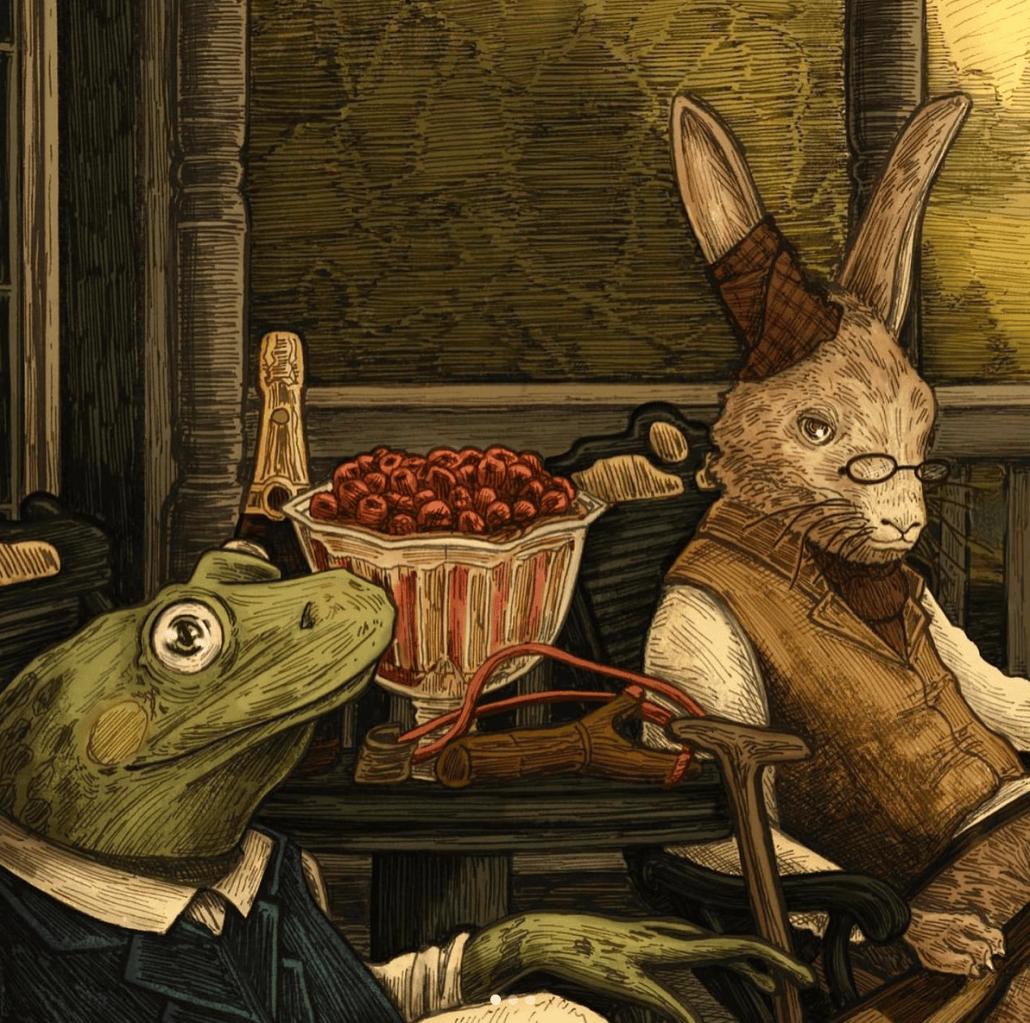
Apart from “Runnymeade Rabbit”, nicknamed “Runny”, the old viola-playing (!) rabbit, there are other classic fictional animal characters: “Flackwell Frog”, a refined frog who is also a chef; “Phineas ‘Finn’ Fox”, the sly, murderous, vengeful fox, and “Binghampton ‘Bing’ Bear”, a grizzly the size of two fridge freezers who is a one-bear killing machine. There’s a talking owl. And there are the “dogs”, things kept in cages, that can only whistle. I’ll leave that horror to you to discover.
Deeper and darker
By the time Eamon has solved the riddle of the identity, life and death of “E.B. Addington”, the death of his own father, his abandonment as a child, and the mystery of the (non)fictional animals on the island, the reader has plunged down a rabbit-hole (sorry for the pun), and then landed in a torture chamber and prison.
You might think this sounds confusing. It isn’t. Durham has taken great care that all the references are explained, all the secrets are revealed, and all the lines followed and unravelled. I have hardly any time these days to finish reading a novel, but I sped through it, because I was anxious to find out the end – and things were getting nauseatingly nasty.
But then, as if he knew how the reader would be feeling, Durham reveals a red-herring-type rescue. The reader relaxes, but the worst is yet to come. The real climax of the novel is nerve-rattling, and the resolution and ending are heartbreaking. It is poignant. It is also just right. He wrote it in exactly the right tone.
More than one storyline
In the midst of these shudderingly scary events, there is a sadness ⏤ about the relationship between children and their parents, and about hunting and killing. I got the message: Thou Shall Not Hunt Wild Creatures for Fun. Thou Shall Not Cage Them or Stuff Them like Trophies on Thy Wall. The subtitle of the book could have been – A Fox’s Revenge.
Also, Eamon finds the peace that has eluded him all his life. As a traumatized, abandoned boy, he was, without realizing it, looking for his missing father on the island. Durham inserts disturbing asides of Eamon remembering doctors, therapists or teachers talking to him and asking questions which he could not answer:
“How are you doing with all of this? How are you coping? Do you want to verbalize what you’re feeling? Would you care to draw something instead? John?” (p. 121)
“Is there anything you want to verbalize, John? Can I get you a glass of water or maybe a pop? Those boots look a little big for you, can you tell me where you got them?” (p. 279)
Oh, the poor boy. The dedication in the reproduced “Winterset Hollow”, reads: “For My Father”. I wonder how much of triple-named Jonathan Edward Durham is in “John Eamon Buckley”.
A real-world writer
Durham, whose popular IG account is @thisoneOverhere, has already done a book signing tour for the second edition. His account contents consists of astute observations, humour, examples of the absurdity of life, and hilarious repartees. His tribe of followers are delightful and well read.
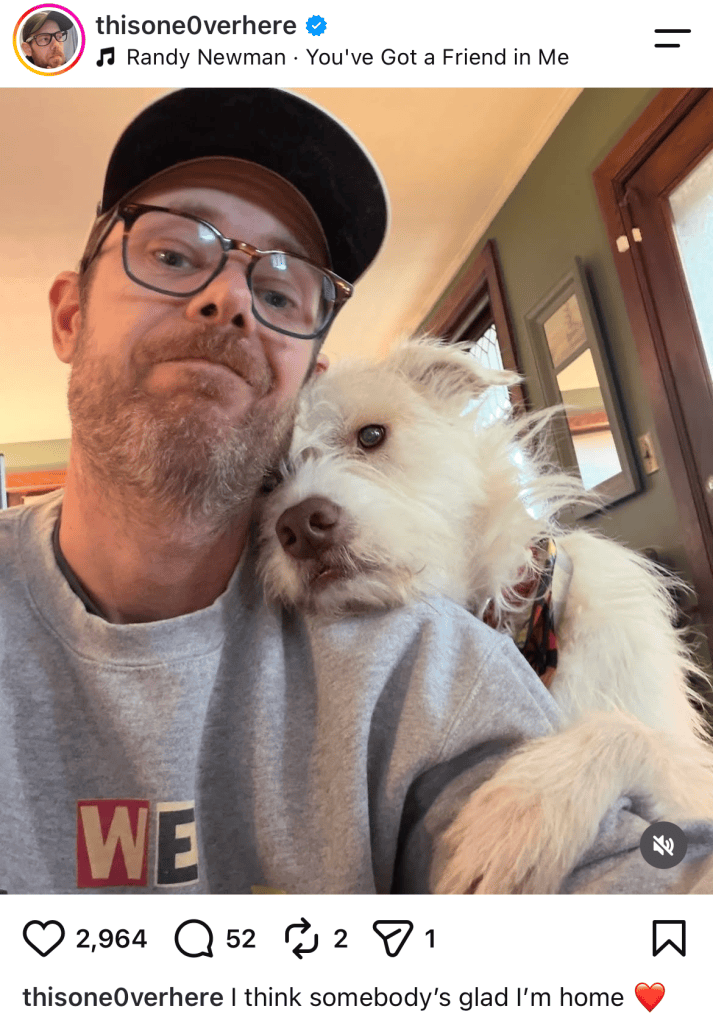
Many internet-famous people write books as an income because having a YouTube, TikTok or IG account does not bring in near enough money to live on. So they use their social media accounts to generate interest in their writing, accumulate followers, and, thereby, accumulate readers who will buy their books. That’s not to say they are any good being an author. But I believe that even if Durham had not had his large social media accounts, he would still have succeeded as an author because, as I’ve said, this is fascinating and excellent writing with enough meaning and depth to stay relevant in the future. Now I hope he will continue Eamon’s story, or write another novel with such engaging characters.
The book has already have generated a lot of fan-art ⏤ there is a dedicated collection on TikTok. And it’s so well written and so popular, that I predict it will be made into a film.


0 comments on “Nothing prepares you for the surreal terror of “Winterset Hollow””