This is the last part on the story on genres. I wrote these posts for all the people who make and sell their creations, the things they work at every day. Publication, sales, and distribution are tricky parts of any business, even more so when what you’re selling is art. When it’s art, you have to deal with categories and genres. You have to answer the question, where does my work fit in?
Once you have figured out how to label your work by genre, by using various types of registration (as I’ve described in the previous posts), pause for a moment and consider the downsides to doing it:
1. Limiting yourself
There is another side to genre and class labels, namely, that you could be putting yourself into a situation of making something to suit a specific genre category, in the process limiting your creative process. I’ve often been told that rigid adherence to form and features is not conducive to creativity in the early stages of project. (Useful toward the end, though.) If you set out to produce something in order that it will fit a genre, your literary product is literally, no pun intended, going straight to a bookshelf for a specific genre in a shop.
Interior of an Indigo bookstore in Toronto, Canada, genres clearly labeled.
So, just because you can, does not mean that you must.
For example, even if you decide to write, from the outset, a cowboy story in the Western Fiction genre, and keep to the rules of what that is, it’s not to say that you will produce a good novel about cowboys on the American West frontier during the late 18th to late 19th centuries. Your very intention of being disciplined and forward-thinking could be counter-productive. Besides, who knows if cowboy stories is your niche, or core to your identity as an artist? Might you be better at writing romances? Or romances about cowboys?
2. Limiting your market
Also, once you have put a genre label on your work, you are defining but also limiting access to it. You are targeting the right audience, but there may be other, larger, audiences out there. You are turning off potential readers, viewers, or listeners. Sort of like fishing in the vast ocean for one specific kind of fish. You’re missing out on catching all the other fishes.
3. Getting negative responses if you change
And, if you are known for writing in one genre, but your book goes into another one, your readers may not like the prospect, and ignore your book. Genre-labeling, one way or another, is risky. Think of the negative reactions that Beyoncé got after her genre-blending move into Country Music with Cowboy Carter.
4. Being inside the box
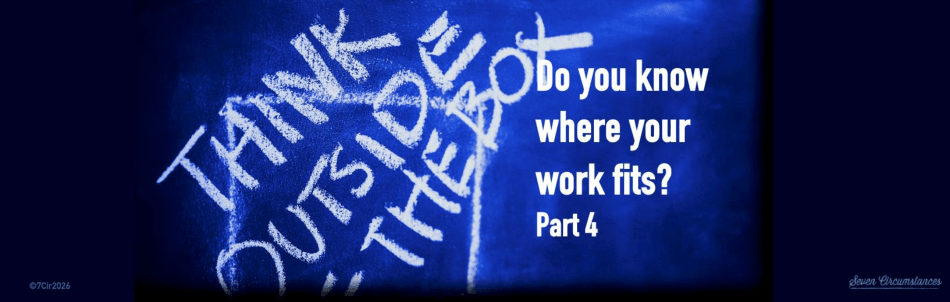
You, personally, might not want to be associated only with a particular genre, or you might not want your creation to be placed only into one genre. You might prefer to stand out, not fit in; to be outside the box, not in the box. You might want to be a category in your own right and not subliminate the uniqueness of your work.
5. Being painted with the same brush
You might also not like the types of books and authors with whom your book is categorized. For instance, you might have written Horror Fiction that is actually tasteful, but your book is listed with others that are just plain dreck, and the ick seems to rub off on your book as well. I feel that way about some music platforms and playlists. When I see the other tracks with which my track has been included, I am often puzzled and sometimes mortified.
Moving away from genre labels in music
Here is a fairly cogent explanation by a music promotions agency, ArtistRack, which should have the inside track on what works and what doesn’t in genre-labeling in music.
Today’s listeners [in 2026] aren’t asking “What genre is this?” They’re asking, “How does this make me feel?” The shift is palpable. Streaming platforms, social media algorithms, and even word-of-mouth recommendations are increasingly driven by mood, vibe, and utility rather than rigid stylistic classifications.
Think about how you discover music now. You might search for a “workout playlist,” “music to chill to,” “focus music for studying,” or even “sad bangers for a rainy day.” These aren’t genres; they’re emotional states and situational needs. Listeners are curating their soundscapes based on how music serves a specific moment in their lives. ― Source: ArtistRack music promotions, Why You Should Stop Labeling Your Music
ArtistRack supports the point of view that a growing number of industry professionals have been touting since early 2025. My songwriting partner loathes genre labels. He gets this look on his face whenever we have to decide which genres the song is. I suspect that if he could, he’d choose a genre totally at random, or one that is so generic as to be meaningless.
The reasons for moving away from genre labels in the music business are complicated, partly technological, party generational. But the fact is, people are looking for soundscapes, not genres, for personalized experiences, not generic products. The ArtistRack writeup spells out many ways of dealing with this shift away from genre-labels, including going directly for sub-genres and using mood tags when you can – so if you want to find out more, read the rest of the article.
So much for resisting the system
This is how the world seems to work at the moment, April 2026. It’s multiple, interconnected systems. It’s The Man putting limitations on you. But working outside the system makes a hard job so much harder and riskier. The book market is still organized and driven by genre labels, even though people would prefer to pick a book by how it promises to make them feel.
Jack Black as music teacher “Dewey Finn”, in the 2003 movie School of Rock, screenplay written by Mike White.
So give it some thought: Where does your work fit in? Where do you fit in? And: Are you now going to pick a genre or two?
To summarize
Ignore the categories, genres and classification of your work only if you understand the implications. Don’t rush in where angels fear to tread.
Understand 1) what class your work fits in; 2) what category your work fits in; and 3) what genre your work fits in.
Make sure you know the descriptions, criteria and features of your genre(s) of choice.
Figure it out before you print, bounce, export, sign off, or whatever your final production step is.
Definitely figure it out before you publish! Your graphics, designs, blurbs, and promotional materials should match the style of your work, and where it fits.
Choose accurately. Do not attempt to deceive.
Make sure that the classification details, and numbers, are correctly listed on the Copyright page of your book, or inserted as meta-tags in your music master file.
Check how your sales go and whether buyers say that they got what they expected. Adjust accordingly. Apparently, on Amazon this is allowed.
If this drives you crazy and you still don’t get the results you want, try doing a Genre-Label Detox.
You’ve got to pick a genre, sorry, pocket, or two…



This is the last part on the story on genres. I wrote these posts for all the people who make and sell their creations, the things they work at every day. Publication, sales, and distribution are tricky parts of any business, even more so when what you’re selling is art. When it’s art, you have to deal with categories and genres. You have to answer the question, where does my work fit in?
Part 1 – You need genres
Part 2 – DDCs and LLCNs
Part 3 – What’s with all the labels?
Part 4 – The downsides of putting it in a genre
Once you have figured out how to label your work by genre, by using various types of registration (as I’ve described in the previous posts), pause for a moment and consider the downsides to doing it:
1. Limiting yourself
There is another side to genre and class labels, namely, that you could be putting yourself into a situation of making something to suit a specific genre category, in the process limiting your creative process. I’ve often been told that rigid adherence to form and features is not conducive to creativity in the early stages of project. (Useful toward the end, though.) If you set out to produce something in order that it will fit a genre, your literary product is literally, no pun intended, going straight to a bookshelf for a specific genre in a shop.
So, just because you can, does not mean that you must.
For example, even if you decide to write, from the outset, a cowboy story in the Western Fiction genre, and keep to the rules of what that is, it’s not to say that you will produce a good novel about cowboys on the American West frontier during the late 18th to late 19th centuries. Your very intention of being disciplined and forward-thinking could be counter-productive. Besides, who knows if cowboy stories is your niche, or core to your identity as an artist? Might you be better at writing romances? Or romances about cowboys?
2. Limiting your market
Also, once you have put a genre label on your work, you are defining but also limiting access to it. You are targeting the right audience, but there may be other, larger, audiences out there. You are turning off potential readers, viewers, or listeners. Sort of like fishing in the vast ocean for one specific kind of fish. You’re missing out on catching all the other fishes.
3. Getting negative responses if you change
And, if you are known for writing in one genre, but your book goes into another one, your readers may not like the prospect, and ignore your book. Genre-labeling, one way or another, is risky. Think of the negative reactions that Beyoncé got after her genre-blending move into Country Music with Cowboy Carter.
4. Being inside the box
You, personally, might not want to be associated only with a particular genre, or you might not want your creation to be placed only into one genre. You might prefer to stand out, not fit in; to be outside the box, not in the box. You might want to be a category in your own right and not subliminate the uniqueness of your work.
5. Being painted with the same brush
You might also not like the types of books and authors with whom your book is categorized. For instance, you might have written Horror Fiction that is actually tasteful, but your book is listed with others that are just plain dreck, and the ick seems to rub off on your book as well. I feel that way about some music platforms and playlists. When I see the other tracks with which my track has been included, I am often puzzled and sometimes mortified.
Moving away from genre labels in music
Here is a fairly cogent explanation by a music promotions agency, ArtistRack, which should have the inside track on what works and what doesn’t in genre-labeling in music.
ArtistRack supports the point of view that a growing number of industry professionals have been touting since early 2025. My songwriting partner loathes genre labels. He gets this look on his face whenever we have to decide which genres the song is. I suspect that if he could, he’d choose a genre totally at random, or one that is so generic as to be meaningless.
The reasons for moving away from genre labels in the music business are complicated, partly technological, party generational. But the fact is, people are looking for soundscapes, not genres, for personalized experiences, not generic products. The ArtistRack writeup spells out many ways of dealing with this shift away from genre-labels, including going directly for sub-genres and using mood tags when you can – so if you want to find out more, read the rest of the article.
So much for resisting the system
This is how the world seems to work at the moment, April 2026. It’s multiple, interconnected systems. It’s The Man putting limitations on you. But working outside the system makes a hard job so much harder and riskier. The book market is still organized and driven by genre labels, even though people would prefer to pick a book by how it promises to make them feel.
So give it some thought: Where does your work fit in? Where do you fit in? And: Are you now going to pick a genre or two?
To summarize
You’ve got to pick a genre, sorry, pocket, or two…
Share this: